mindyswimming

Uncategorized

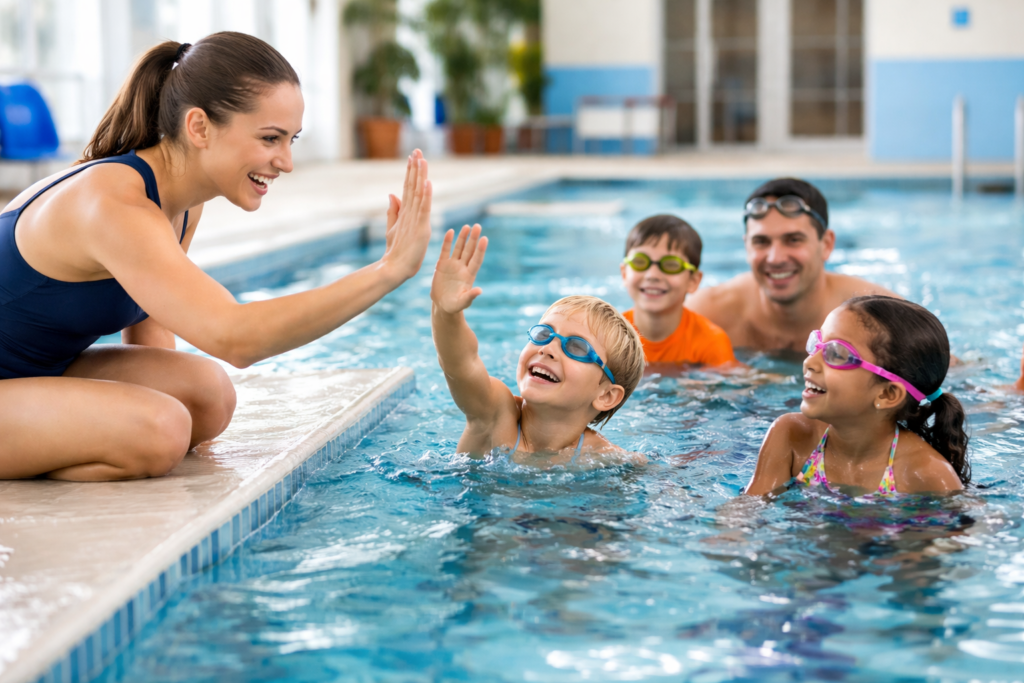
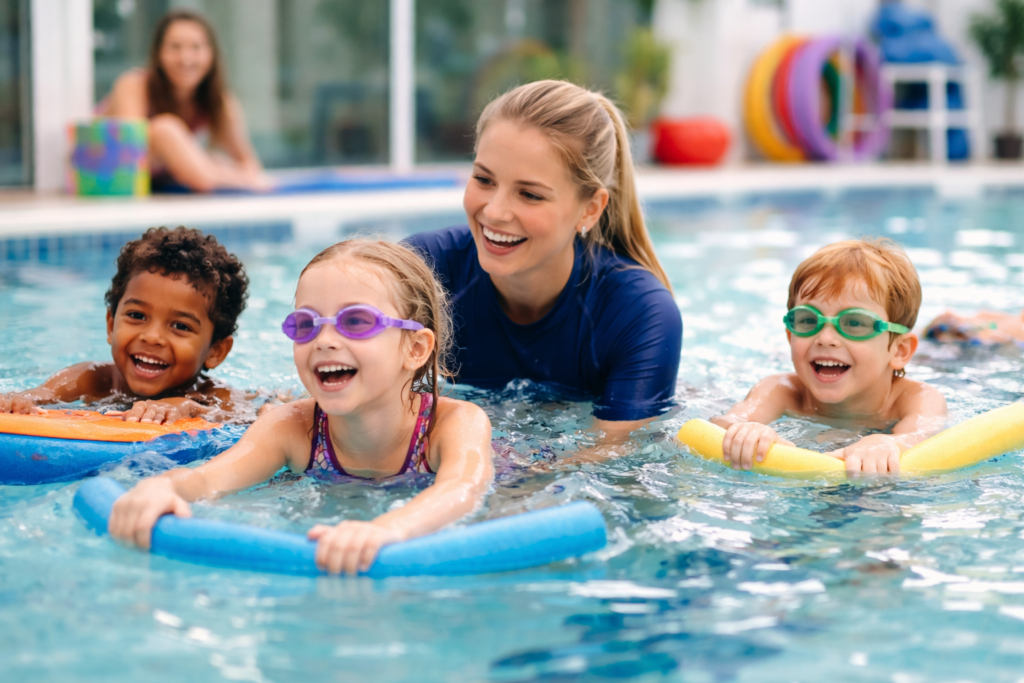
Kids swimming lesson in Des Moines with joyful instructor guiding children

Mindy Swimming – Kids Swimming Lessons in Des Moines

Let me tell you about a Tuesday afternoon that changed everything for my neighbor, Sarah. Her daughter, Lily, had just turned four and was terrified of water—bath time was a negotiation, and sprinklers were a hard no. Sarah was scrolling through her phone, exhausted, typing “kids swimming lessons in Des Moines” for the tenth time that month. She wasn’t just looking for a class; she was looking for a miracle worker. Lily needed someone who understood that, for her, the pool wasn’t fun—it was a giant, scary bathtub. That’s when she found Mindy Aronow, and honestly, what happened next felt a bit like magic. Why Des Moines Parents Prioritize Water Safety We live in Iowa. Summer means backyard pools, weekends at Saylorville Lake, and splash pads at every park. It’s wonderful—until you’re a parent. Every body of water quickly becomes a “what-if” scenario. I’ve been there—standing poolside at a party, eyes locked on my kids, counting heads every ten seconds. It’s exhausting. The statistics around water safety are often terrifying for parents to read. Yet, here’s what they don’t tell you: signing your kid up for lessons isn’t just about safety. It’s about getting your peace of mind back. It’s about watching them jump in—not with your heart in your throat, but with a genuine smile on your face because you know they know exactly what to do. In Des Moines, finding that level of trust starts with an instructor who has seen it all. The Real “Mindy Magic”: 30 Years of Individual Connection When you walk onto the pool deck at Mindy Aronow’s, you won’t see the typical chaos of a big swim school. There are no kids sitting on the side of the pool dangling their feet, and no one is waiting 10 minutes for their turn while an instructor manages a group. Most importantly, you won’t find “mermaid” games or generic play-acting that distracts from the water. The “Mindy Magic” is rooted in over 30 years of experience teaching children right here in Des Moines. Mindy understands that for a child to learn, they first have to feel safe. Because every lesson is strictly one-on-one (1:1 ratio), the focus begins the second the child arrives. There is no military-style drill and no “one size fits all” curriculum. Instead, there is a deep, individual connection. Mindy and her instructors remember that for a hesitant child, putting their face in the water is as big a deal as giving a corporate presentation is for an adult. A Peek Inside the Pool: Focused, Private Instruction A typical lesson with Mindy is calm, intentional, and beautifully organized. You won’t find the ‘fun and games’ typical of group swim schools because those activities are designed to keep a crowd busy, not to teach an individual. Each teacher does their own thing with their own student. Whether it’s mastering breath control or refining a stroke, the instruction is 100% focused on the child in the water. We don’t do group songs like “Ring Around the Rosie” or “Motorboat.” Instead, we focus on the specific developmental needs of the student. The pool environment is specifically designed for this comfort. The water is warm and inviting—never cold—which is essential for helping a nervous child relax their muscles and focus. We also use a saltwater system, meaning no more red, stinging eyes for the kids, which removes another layer of fear. When Group Classes Aren’t the Right Fit (Special Needs Expertise) For many families, group classes are simply overwhelming. If your child is on the spectrum (Autism), or dealing with behavioral challenges, the noise and movement of a typical swim school can be a major barrier. This is where Mindy’s expertise truly shines. She specializes in working with children who need a different path, including those with Cerebral Palsy and Spina Bifida. These lessons provide the quiet, repetition, and steady person that these brave swimmers need. We use specific, tailored methods—like special hand signals for “ready to go under” or counting to three for every step—to ensure there are no surprises. What might look like slow progress on paper is monumental for these families. The day a child who once struggled with sensory overload finally floats independently on their back is a victory that often brings parents to tears. Sometimes, the “best” lesson is the one that moves at your child’s unique, individual pace. Beyond the Lessons: Consistency, Parties, and Real-Life Skills Consistency is the key to water confidence. That’s why Mindy’s lessons aren’t just a “once-a-week on Wednesday” commitment. To ensure children actually retain what they learn, lessons are available Monday through Friday. This daily or frequent rhythm helps turn new skills into muscle memory. Exciting News: Birthday Parties! For the first time this year, Mindy is opening up her pool for Birthday Parties! While this is a new service, it’s already becoming a favorite for parents looking for a safe, controlled environment. The Logistics: Mindy handles the pool, the professional lifeguards (maintaining strict safety ratios), and the cleanup. The Parents’ Role: To keep things personalized, parents supply the cake, treats, and whatever entertainment they want to bring. Safety First: Parties are strictly for children ages five and up, with specific adult-to-child ratios (1:3 for kids under seven, and 1:4 for kids ages 7-12) to ensure every child is supervised by a professional lifeguard. Preparing for the First Lesson: A Partnership with Parents Mindy believes in a “No Goggles” and “No Floaties” policy during lessons. This ensures that children learn to navigate the water as they would in a real-life situation. To help your child prepare, we encourage parents to start the process at home during bathtime. Bathtime Practice: Gently pour water over your child’s head and encourage them to lay back and put their ears in the water. No Force, Just Practice: While we never force a child, we do ask parents to encourage these small steps at home so the child arrives at the pool ready to progress. Making the Choice: Why

Mindy Swimming – Kids Swimming Lessons in Des Moines Read More »
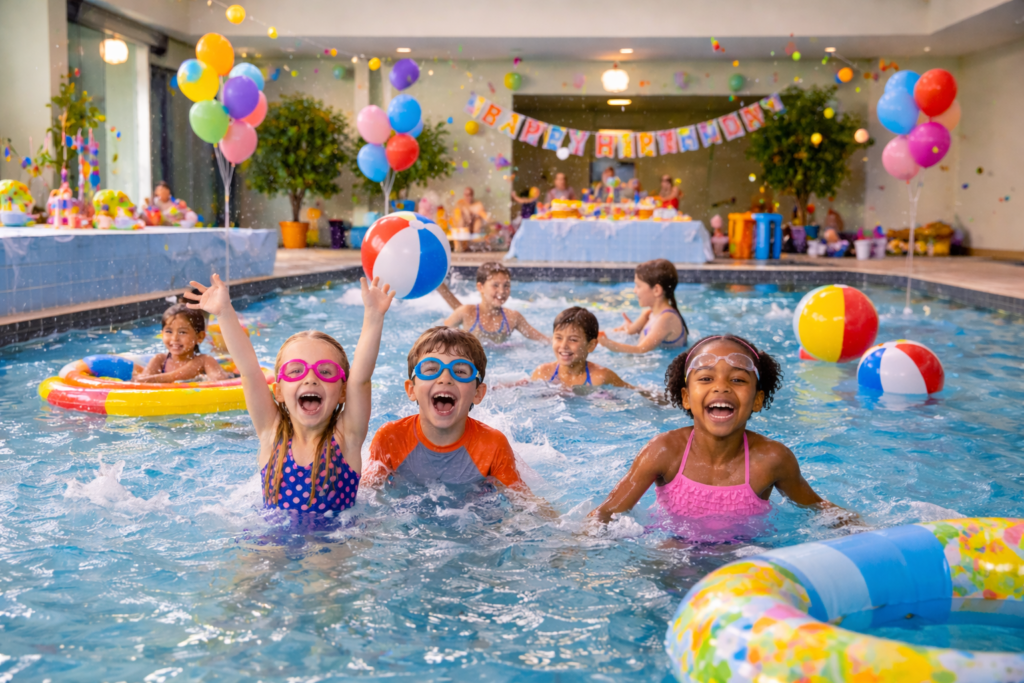
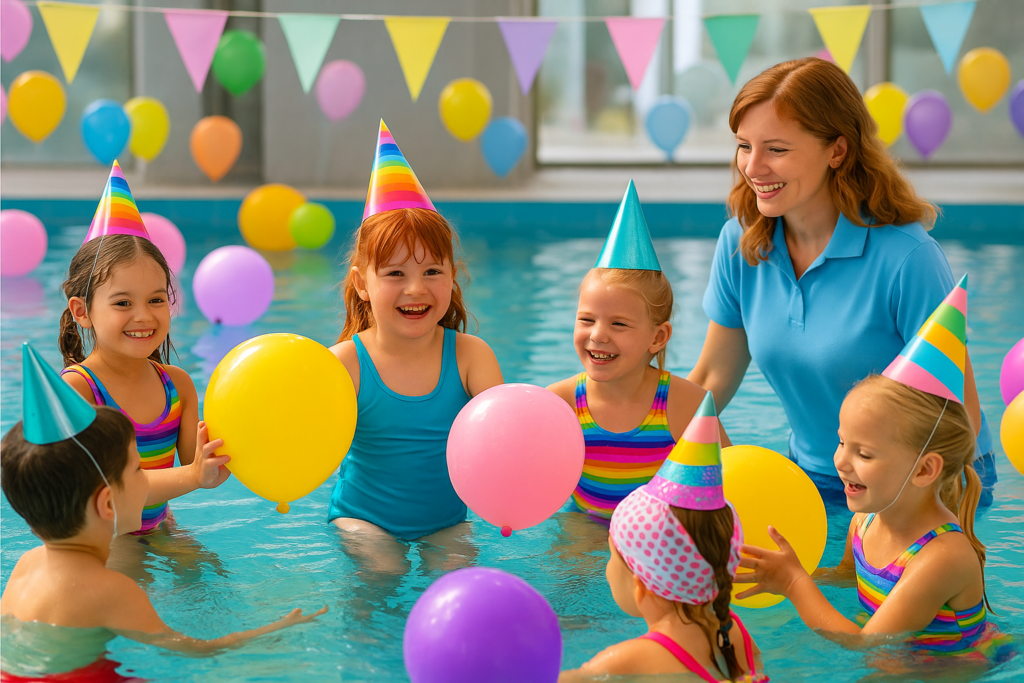
Kids enjoying a supervised indoor pool birthday party with balloons and games.

Birthday Party Packages Near Me: Why Parents Love Mindy Swimming in Des Moines

Searching for the perfect “birthday party packages near me” in Des Moines? Honestly, you’re not just looking for a venue. You’re actually hoping for a great birthday party experience—a place where kids have the time of their lives, and you finally get to enjoy the party instead of managing it. If you’re a Des Moines parent, you’ve probably clicked on dozens of listings. Pools, trampoline parks, play centers… the options feel endless. But let’s talk about the open secret many local parents are discovering: Mindy Aronow’s pool birthday party packages. Since this is our first year offering these celebrations, you are discovering a fresh way to celebrate that prioritizes safety and individual attention over the usual chaotic crowd. 1. The “Safety First” Peace of Mind Your first thought about a “swimming pool birthday party” might be: “But what about the stress? The safety?” This is exactly where Mindy shifts from being a venue to a partner. At a traditional park or home party, the parent has to be the lifeguard and the janitor. At Mindy’s, the professional safety roles are handled by us. How We Split the Responsibilities: What Mindy Handles: We provide the private pool, professional lifeguards (including one-on-one lifeguarding where needed), and the complete cleanup of the facility. You leave the mess behind—no sticky floors to mop or trash bags to haul. What Parents Handle: To keep things personalized and within your budget, parents supply the cake, treats, drinks, and whatever entertainment you want to bring. Whether it’s a specific character, a magician, or a themed playlist, you are in control of the fun. Strict Age Requirements: To maintain the highest level of safety, please note that our birthday parties are for children ages five and up. We do not host parties for three or four-year-olds, as our focus is on ensuring every child in the water is at a developmental stage where they can safely enjoy a group setting under professional supervision. 2. More Than a “Pool Party for Kids”—It’s a Personalized Experience Most venues offer a “one-size-fits-all” approach. Mindy knows that every child’s needs are different. This isn’t a “swim school” environment; it’s a private, focused setting where the individual student or guest comes first. Creating Your Vision: Mindy’s facility is the perfect canvas for your child’s dream world. Whether they are obsessed with “Superheroes,” “Under the Sea,” or a “Tropical Luau,” you bring the theme decorations and our space transforms for you. Because parents supply the food, you have 100% control over dietary needs and allergy concerns. No more worrying about “venue-provided” snacks that might not be safe for your guests. 3. Transparency: No Hidden Surprises When comparing birthday party packages, the biggest fear for Des Moines parents is hidden costs. You see a low price, but then get charged for “table rental” or “lifeguard fees.” At Mindy’s, we focus on clarity and upfront value. What exactly is included? Private Pool Access: The pool is yours. No sharing with public swimmers or loud outside groups. Certified Lifeguard Supervision: Professional safety is built into every package. Cleanup Service: We handle the room turnaround so you don’t have to. Budget Control: By supplying your own cake and entertainment, you stay in control of the total cost. Parents searching for “affordable kids birthday party packages Des Moines” find real value here—it’s not just about the price, but the priceless peace of mind. 4. How to Pick the Best Lessons (Not a “Swim School”) If you are also looking for instruction, it’s important to understand that Mindy does not run a swim school. Schools often focus on group volume and front-desk logistics. Mindy focuses on the student. When choosing lessons geared toward the individual, look for: Direct Instructor Rapport: There is no “front desk” fluff here. You see the expertise directly in the water. Individualized Goals: Any good lesson should be tailored to the specific child’s fears or strengths, not a rigid group curriculum. Observation: Parents are encouraged to observe the progress and feel the vibe of the environment firsthand. We focus entirely on the quality of our own lessons and don’t spend time advertising other “spots” in Des Moines. Our 30-year track record is why local families trust us. 5. The Logistics: What You Need to Know Planning is key to a stress-free day. When you book a party with us, we ensure you have all the facts: Supervision Ratios: For children under seven, we require one adult for every three kids. For ages 7–12, the ratio is one adult for every four kids. Outdoor Safety: Because our pool is an outdoor facility, we do not host evening parties. This ensures maximum visibility and safety. (Note: “Indoor heating” is not applicable as we are a seasonal outdoor pool). Family-First Environment: To maintain a safe, kid-friendly atmosphere, no alcohol is allowed on the premises. This ensures every parent feels comfortable and the focus remains entirely on the birthday child. The Bottom Line for Des Moines Parents When your search for “Birthday party packages for kids in Des Moines Iowa” leads you to Mindy Aronow, you’re booking a memory. You’re booking: SAFETY through professional lifeguarding and strict age limits. FLEXIBILITY by bringing your own treats and vision. RELIABILITY from a local expert with 30 years of experience. Ready to trade “Party Manager” for “Proud Parent”? Check out the available dates for Mindy’s pool parties today and see why we are becoming Des Moines’ favorite choice for safe, unforgettable celebrations.

Birthday Party Packages Near Me: Why Parents Love Mindy Swimming in Des Moines Read More »
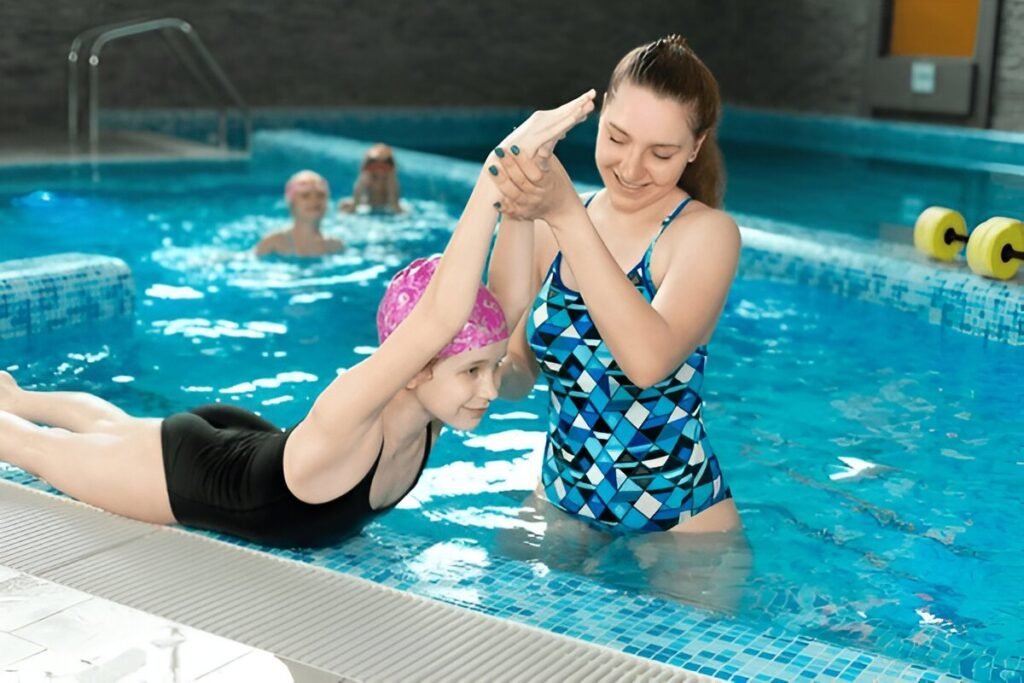
Kids and adults learning swimming in an indoor pool in Des Moines with a friendly instructor

Top 10 Swimming Lessons for Adults & Kids in Des Moines (Beginners to Advanced)

Hey there, Des Moines parents. Or maybe you’re an adult who’s always wanted to learn but felt…well, a bit awkward about starting. I get it. My name’s Mindy Aronow, and before I ever wrote about swimming, I spent years teaching it. I’ve held trembling toddlers during their first float, cheered for teens mastering their flip turns, and even gently guided a few brave grandparents through their first lap. What I learned? The right swim lesson isn’t about the fanciest pool or the fastest program. It’s about the instructor who remembers your child’s name, the class that laughs together, and the moment someone realizes, “Hey, I can do this.” So, if you’re scrolling through “swim lessons Des Moines” feeling overwhelmed, let’s chat. I’ve put together this guide not as a robotic list, but as a real, personal look at where I’d send my own friends and family. Why Learning to Swim in Des Moines is About More Than Just Strokes Let’s be real—we live in a state with lakes, pools, and backyard barbecues where kids gather around water. Knowing how to swim isn’t just a summer activity here; it’s a layer of safety that lets everyone breathe easier. But beyond safety, there’s the joy. I’ll never forget the smile on a 7-year-old’s face when she swam her first full length without stopping. Or the proud tears of a 45-year-old who finally faced his fear of deep water. That’s the magic we’re really after. How to Pick a Swim School (Without Losing Your Mind) Trust me, I’ve seen parents stress over this. Here’s my down-to-earth checklist: Watch a Class (Seriously, Just Ask). Any good school will let you observe. Don’t just watch the kids—watch the teachers. Are they on the pool deck leaning in, or distracted? Do they give high-fives? Ask the “Scared Kid” Question. How do they handle a child who cries or an adult who freezes up? The answer tells you everything about their patience. Forget “Advanced” Jargon for Beginners. If you’re searching for “private adult swim lessons near me,” you want calm, clear communication, not an Olympic coach on day one. Feel the Vibe. Is the place chaotic or calm? Is the front desk staff smiling? You’re not just buying lessons; you’re joining a community for a few months. The Spots I Trust in Des Moines: A Personal Rundown Here are my genuine, locally-sourced favorites. Think of this as advice from a neighbor who’s been in every pool in town. Mindy Swimming – Where Everyone Knows Your NameThis is the cozy, family-owned spot I recommend to almost every new parent. Mindy herself often greets you at the door. Their strength? Turning nervous beginners into beaming, confident swimmers. For affordable swim classes for kids in Des Moines that don’t feel like an assembly line, this is it.Perfect for: First-timers, hesitant kids, parents who want a “village” feel. The YMCA – The Heart of the CommunityYou can’t go wrong here. The instructors are deeply committed, and the programs serve everyone from toddlers to seniors. Their swimming lessons for teens in Des Moines IA are especially strong for building discipline and fitness in a positive environment.Perfect for: Families who want a one-stop-shop for all things wellness. Fins Up Swim Academy – For the Budding AthleteIf your child has mastered the basics and is dreaming of swim meets, head here. The coaching is next-level, but still focused on joy. The drive to Ankeny is worth it for serious skill development.Perfect for: Kids ready to move from “learning” to “training.” Your Own Backyard (Well, Almost) – Private InstructorsSometimes, a group setting isn’t the answer. Searching for “Private swim lessons Des Moines” can connect you with incredible one-on-one teachers. I know a few retired coaches who offer lessons in their home pools—it’s personalized, flexible, and perfect for busy or self-conscious learners.Perfect for: Adults with packed schedules, kids who need extra focus, or anyone with a specific fear. (I’d continue this casual, review-style format for a few more standout options, like Goldfish for their kid-centric fun or Des Moines Parks & Rec for great summer-intro classes.) A Few Things I Tell Every New Student (and Their Parents) Progress Isn’t Linear. Some weeks they’ll leap forward, others they’ll cling to the wall. That’s normal. Celebrate the courage to show up. Ear-to-Ear Grins > Perfect Freestyle. The goal is a positive relationship with water. The technical stuff follows. Pack Patience with the Towel. For adults: your body learns differently at 30 than at 8. Be kind to yourself. Why I Keep Coming Back to Mindy as a Benchmark I’m not just mentioning them because this is their case study. In all my years, I’ve seen few schools balance expertise and heart so well. They remember that “water safety swim lessons for toddlers” is about trust first, skills second. Their instructors aren’t just certified; they’re caring. In a world of rushed transactions, they offer a real connection. Your Next Step (It’s Easier Than You Think) If this all feels like a lot, just start with one thing. Call a school and ask if you can watch for 10 minutes. Or book a single intro lesson for beginners in Des Moines to test the waters (pun intended!). The perfect class is out there—the one where you or your child will be seen, encouraged, and celebrated. Not just taught, but truly welcomed. Ready to get started? [Come see what makes Mindy’s Swimming different] or give them a call at [(515)-314-5465]. Tell them Mindy Aronow sent you—they’ll know exactly the kind of warm, beginner-friendly welcome you’re looking for. Here’s to finding your confidence, one splash at a time.

Top 10 Swimming Lessons for Adults & Kids in Des Moines (Beginners to Advanced) Read More »

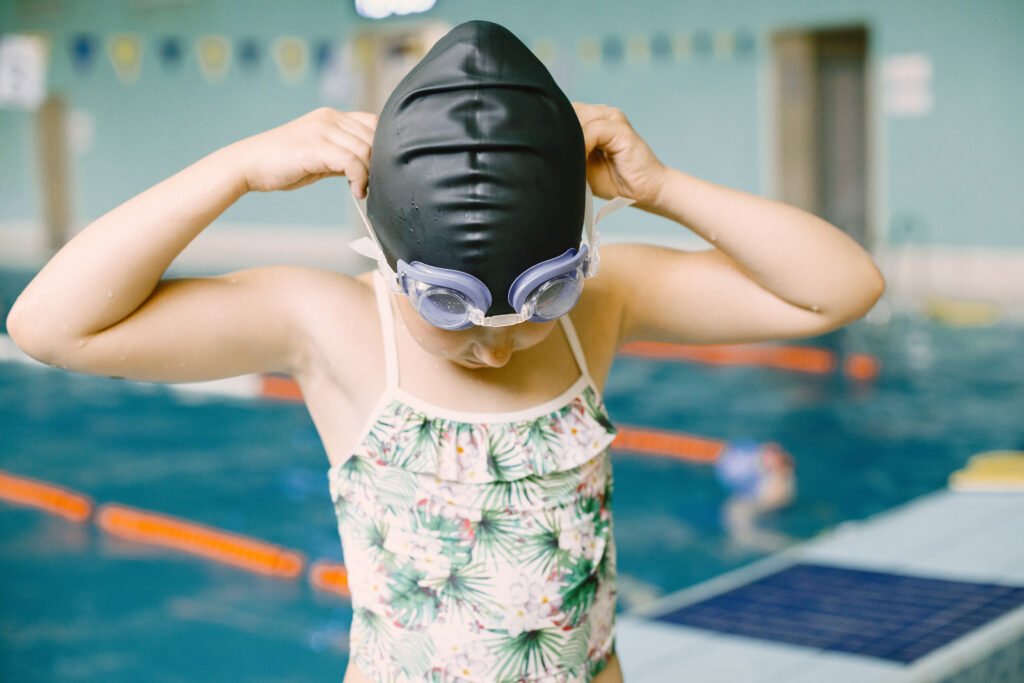
4. Image Alt Text: Young child in swimsuit, goggles, and swim cap standing at poolside ready for their first swimming lesson

What to Wear to Your First Swim Lesson: Complete Checklist

I still remember my first day as a private swim instructor more than 30 years ago. A little boy named Gregg stood shivering by the pool, his fingers curled tightly around a fluffy towel. His mom looked just as nervous, double-checking her bag every few seconds. That’s when it hit me—starting swim lessons isn’t just about courage; it’s about feeling prepared. Over the years, I’ve guided thousands of beginners, from wobbly toddlers to hesitant adults. Almost everyone arrives with that same question: “Am I forgetting something?” Consider this your personal packing guide—a heartfelt, practical checklist from someone who’s been in your shoes. 1. Swimwear: Where Comfort Meets Confidence Little Gregg taught me an unforgettable lesson. He showed up in loose, knee-length swim trunks—adorable, but impractical. In the water, they ballooned around his legs, making every kick a struggle. The following day I got his mom convinced to switch him to fitted swim shorts, and suddenly, he was gliding. Here’s what truly works: For kids, snug but stretchy suits work best—think one-pieces for girls and brief-style trunks for boys. Adults should prioritize comfort and freedom of movement. When shopping, lean toward polyester blends. They dry quickly and resist chlorine damage better than cotton. Little girls in two-piece suits are really cute, but if they have to spend time trying to hold the bottoms on or pulling the top down when jumping in, they will not feel comfortable. 2. Goggles: NOT ALLOWED Goggles are NOT ALLOWED until the student has reached a level where they can open their eyes in the water and swim to a wall for safety. No exceptions. 3. Swim Caps & Hair Ties Caps are not essential, but they are especially helpful for girls or boys with long hair to keep it out of their faces. For beginners, start with a soft, stretchy Lycra cap. Later, you can upgrade to silicone for better durability. HAIR TIES: These are an absolute must-have with long hair. This is for their safety; they have to be able to see and breathe without hair in their face. Some kids don’t like hair ties, but it’s not an option here with long hair that isn’t put up in a cap. 4. Towels & Footwear Pack one large, absorbent towel (hooded is a bonus), plus non-slip flip-flops or water shoes. Pool decks can get scorching hot. Many online retailers sell “swim lesson starter packs” that bundle these essentials together. 5. The Swim Bag I recommend a dedicated swim bag with separate wet and dry compartments. Mesh bags work wonderfully for wet gear, while insulated side pockets keep drinks cool. 6. Leave These at Home Jewelry can get lost or cause injury, and cotton clothes become heavy when wet. Absolutely no floaties; they often give a false sense of security. Instead, wait for your instructor to recommend training aids like kickboards or pull buoys once your child is ready. The first step is independence and having the skills to be safe. 7. The Intangible Essential: Your Mindset Arrive a little early, breathe deeply, and focus on the fun. Progress in the water isn’t always linear, and that’s perfectly okay. Fun Activity Suggestions for Your Birthday Party Note: The following games are suggestions for parents to run during their private birthday party rentals. While we provide the safe environment and professional lifeguards, Mindy is not responsible for organizing or running these activities. Parents are encouraged to lead the fun and provide any prizes for the winners! Treasure Hunt: Toss non-weighted toys for kids to find. Invisible Bottle: Fill a clear bottle with pool water—it’s harder to find than you think! Ping Pong Race: Blow on the balls to get them across the pool. Human Bridge: Swim through the legs of friends. Noodle Races: Gallop across the water on pool noodles. Your Ready-to-Use Shopping List Essentials: Fitted swimsuit (polyester/nylon) Hair ties (Absolute must for long hair) Lycra or silicone swim cap Large hooded towel Non-slip water shoes or flip-flops Wet/dry swim bag Reusable water bottle Important Rules: No goggles (until safety levels are met) No floaties No nose plugs or scuba masks Only Dr. prescribed ear plugs can be used. Do not invest in them just because a child doesn’t like water in their ears.

What to Wear to Your First Swim Lesson: Complete Checklist Read More »

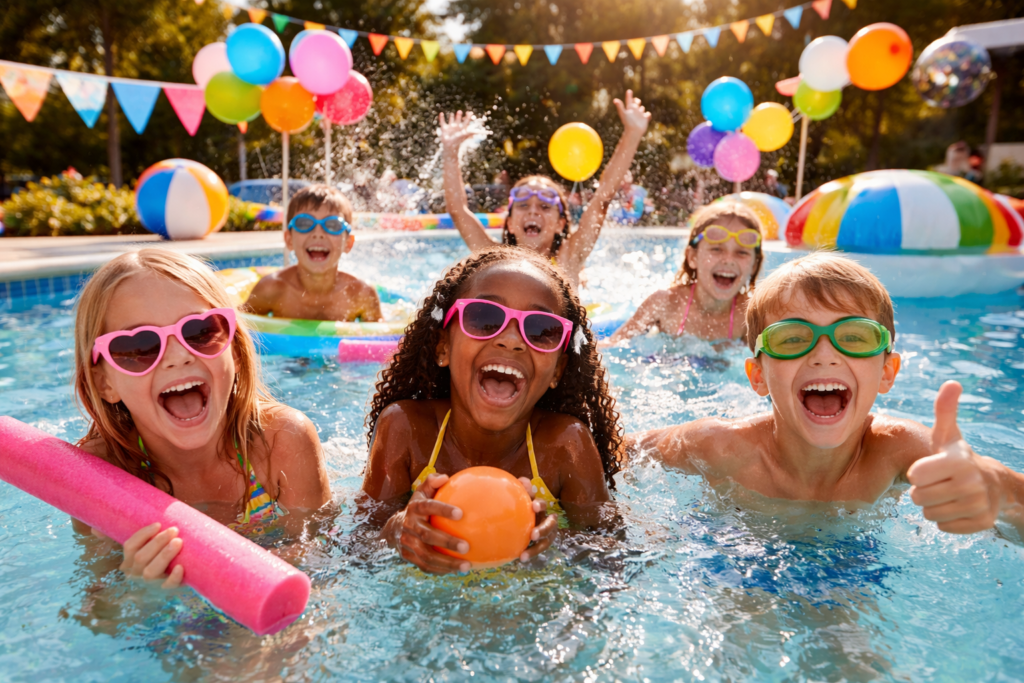
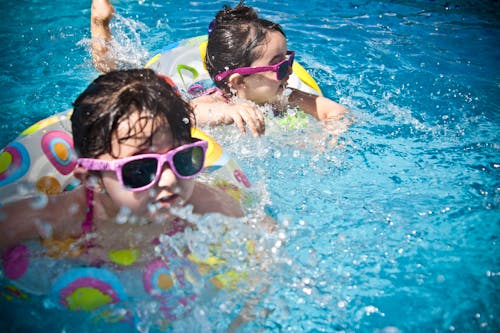
Group of happy children wearing sunglasses and playing with pool noodles and balls in a colorful swimming pool during a birthday party.

Top 10 Fun Swimming Activities for Birthday Parties and Open Swim Days

Honestly, planning a birthday party for your kid can be kind of stressful. You want it to be fun, memorable, and safe all at once. And let’s be real—kids can be picky, unpredictable little humans. That’s why a swimming party is usually a win. Open swim days at Mindy Swimming aren’t just about splashing around—they’re a chance for kids to run wild in the water, try some fun activities, and make memories that last. So whether it’s a full-blown birthday bash or just a casual swim day, here are 10 swimming activities for kids that really work. Trust me, parents love them too. 1. Pool Noodle Races Ah, pool noodles. They’re not just colorful sticks floating around—they’re magical little things for fun. Kids can float on them, push off, or just balance while racing across the pool. It’s simple, safe, and somehow hilarious every time. And bonus: adults can join too if they’re brave enough. 2. Treasure Hunt in Water This one’s always a hit. Grab some sinkable toys or floating rings and toss them into the shallow end. Kids go diving, splashing, and hunting for treasure like little minnows. You can even have a small prize for the one who gets the most in an allotted time. This can also be done in teams. It’s fun, encourages teamwork, and yes—there’s a lot of giggling involved. 3. Sharks and Minnows The kids divide into two sharks and the rest are minnows. The minnows must swim across the pool without being tagged by a shark. If they are tagged they become a shark. 4. Water Balloon Toss Even if not all the games are in the pool, water balloons are gold. Pair the kids up, toss some balloons back and forth, and watch chaos ensue. Start close, then go further apart. Expect some splashes (and maybe a soaked parent or two). It’s light, fun, and perfect for a friendly little competition. 5. Simon Says – Pool Edition Simon Says works on land, so why not in water? Adapt the commands: “Simon says float on your back,” or “Simon says kick to the other side.” Kids love it because it’s silly and a little challenging. Plus, it’s easy to throw in little twists that keep them on their toes. 6. Relay Races with Kickboards Classic, but still awesome. Teams, kickboards, race across and back. Add small challenges if you want—like swimming backward, or carrying a little toy without dropping it. It’s energetic, fun, and parents usually end up cheering louder than the kids. 7. Marco Polo The kids close their eyes and try to swim and tag another swimmer in the pool. This requires honesty on the part of the participants so can be a little harder. 8. Diving for Toys Drop a few weighted toys or rings into the shallow end and let the kids dive. Simple, safe, and great for building confidence underwater. Make sure someone is always watching—safety first. Kids love showing off their underwater “skills,” and it’s adorable. 9. Bubble Blowing Contest Blowing bubbles in water is surprisingly fun. Who can make the biggest bubble? The most bubbles? Time them, cheer them on. It’s low-energy, but still entertaining, and perfect after more active games. 10. Parent & Child Team Games Get the parents in on the fun. Simple races, toss games, or floating relay challenges make the day more inclusive. Kids feel safe and excited, and honestly, it’s just plain fun watching adults try to keep up with little humans in water. Tips for a Stress-Free Swimming Party Safety first, always: Life jackets, floaties, and lifeguards. Keep it age-appropriate: Not all kids are confident swimmers—plan accordingly. Focus on fun, not competition: It’s about enjoyment, not winning medals. Snacks & hydration: Swimming makes them thirsty and hungry fast. Memories: Take photos or short videos (with permission!) to remember the day. Why Swimming Parties Are the Best Swimming parties are just… fun. Kids burn energy, learn a bit about water confidence, and enjoy social interaction all at once. And the best part? You can adapt the games for small or large groups. Using these swimming activities for kids makes your child’s birthday party not just fun, but memorable. Book Your Child’s Birthday Party or Open Swim Day! If you want a party that kids rave about and parents sigh with relief, Mindy Swimming has everything you need. From space to staff, and these activity ideas? You’re all set. Check out our swimming pool birthday party ideas and schedule your open swim day today!

Top 10 Fun Swimming Activities for Birthday Parties and Open Swim Days Read More »

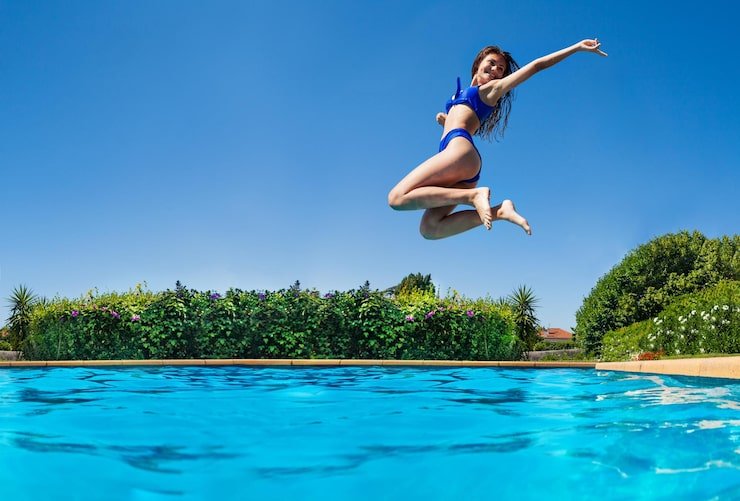
Woman joyfully jumping into a swimming pool, enjoying fitness and fun

The Ultimate Guide to Swimming for Fitness & Fun – Mindy Swimming

Introduction: Why Water is Your New Best Friend Have you ever watched water ripple under the sun and felt a gentle pull? Perhaps you’ve stood at the pool’s edge, toes curling, heart whispering a mix of excitement and nervousness. You are not alone. Many of us yearn for that unique blend of fitness and freedom that only water provides. Welcome to your first, friendly splash into a world where “Swimming for Fitness & Fun” isn’t just a phrase—it’s a feeling. This guide is your companion, crafted with care by the coaches at Mindy Swimming, to transform that yearning into confident, joyful strokes. Let’s begin this journey together. Why Swimming is the Perfect Fitness Activity Simply put, swimming is a miracle workout. Unlike the jarring impact of running, water cradles your joints while challenging every muscle. It’s a powerful cardio session that also builds strength and flexibility. But the magic goes deeper. The water’s embrace melts away daily stress, offering a mental reset with every lap. Whether you’re a teen seeking a cool sport or an adult desiring a sustainable fitness routine, the pool welcomes all. It’s not just exercise; it’s a sanctuary. Beginner-Friendly Swimming Tips: Steps to Try Before Your Lessons These steps are helpful suggestions for you to try on your own before starting our professional 1:1 lessons to help build comfort and alleviate initial fears. Start With Friendship: Never swim alone. Bring a buddy or ensure a lifeguard is present. Safety is the foundation of all fun. Get Comfortable: Spend your first personal session just walking in shallow water. Feel its resistance, play, and laugh. There’s no rush. Master the Basics: Floating and gentle kicking are your first victories. Hold the pool edge, take a deep breath, and let your legs rise. Overcoming Fear of Water: A Step-by-Step Guide That flutter in your chest is normal. We’ve guided hundreds through this, and you can move past it too. Acknowledge The Fear: Name it. Say, “I’m nervous about putting my face in the water.” This takes away its power. Control Your Breath: On dry land, practice deep, slow breathing. Inhale for 4 counts, exhale for 6. This is your anchor. The Gradual Approach: Start by just sprinkling water on your face. Next, try chin-deep, then lips. Celebrate each tiny win. With consistent, patient practice, the water transforms from a source of anxiety into a space of peace. Fun Swimming Workouts for All Levels Boredom has no place here! Here are engaging routines to make every splash count. For Absolute Beginners: The “Playful 20.” Alternate 2 minutes of walking in water with 2 minutes of holding the edge and kicking. Repeat for 20 minutes. It’s simple, effective, and builds stamina joyfully. For Building Fitness: Try interval training. Swim one lap at a comfortable pace, then rest for 30 seconds. Gradually increase to two laps, then three. This method, often called “pace training,” boosts your heart health efficiently. For Skill Improvement: Focus on one stroke per session throughout the week. Use tools like a kickboard to isolate and strengthen your leg movements. Essential Gear and Safety Tips The right gear enhances comfort and safety, letting you focus on the joy. Must-Haves: A well-fitting swimsuit is your best investment. While goggles are helpful for fitness, remember that in our 1:1 lessons, we avoid them until basic safety skills are mastered. Helpful Tools: A kickboard is a beginner’s best friend for leg drills. Pull buoys help you focus on arm strokes. Don’t forget a waterproof bottle—staying hydrated is key, even in the water! Safety First: Always listen to your body. Tired? Rest. Cramping? Stop and gently stretch. Respect the water, and it will reward you with endless fun. Your Journey Starts Now: Dive Into a Healthier, Happier You Remember, every expert swimmer once took that first, tentative step into the shallow end. Your journey in the pool is uniquely yours—measured not just in laps or speed, but in the growing peace in your mind and the strength in your spirit. At Mindy Swimming, we believe in structured guidance wrapped in genuine encouragement. We’re here to cheer every small victory, from your first unassisted float to your first full lap.

The Ultimate Guide to Swimming for Fitness & Fun – Mindy Swimming Read More »

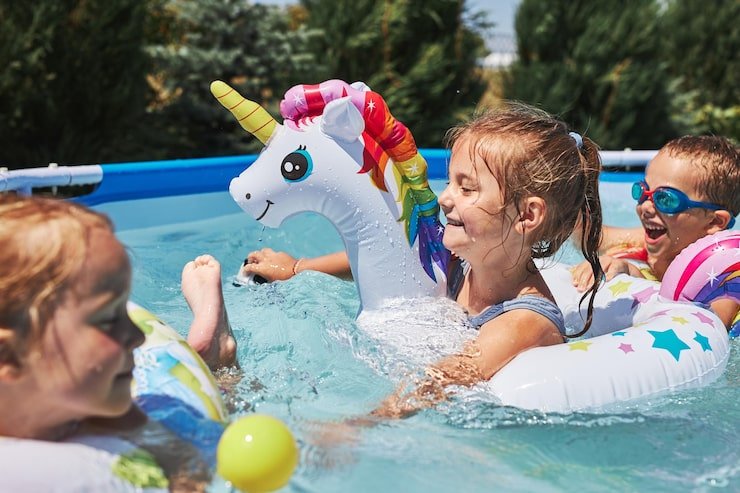
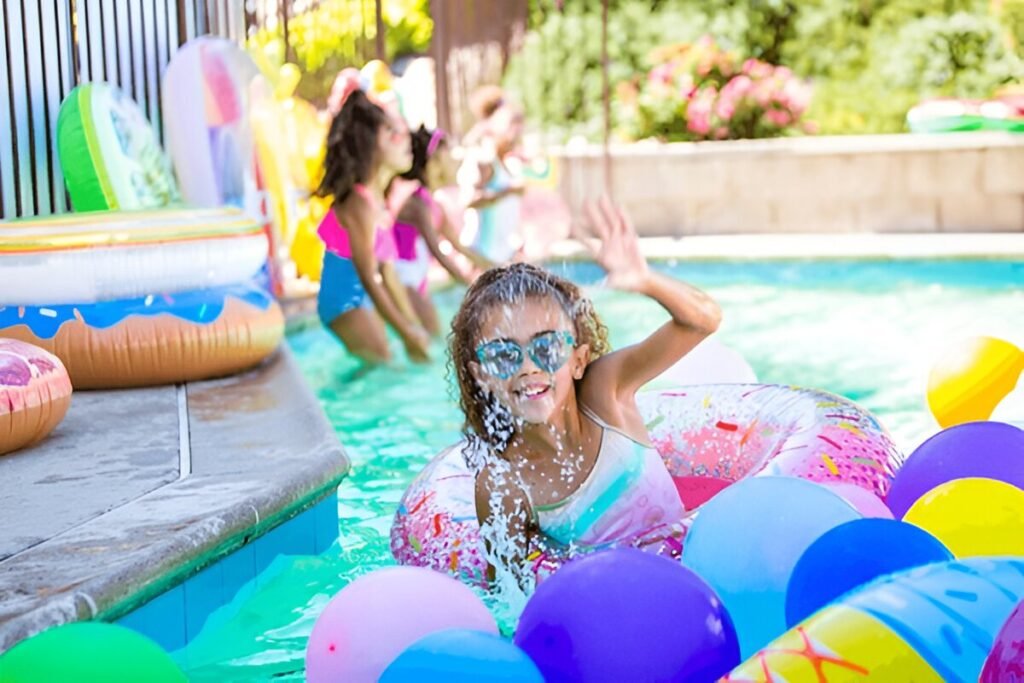
Kids enjoying a backyard swimming pool birthday party with colorful inflatables

Kids’ Pool Party Magic: Fun Themes, Games & Safety Tips for an Unforgettable Birthday

Introduction: Planning Your Child’s Perfect Day Planning your child’s birthday party always comes with a mix of excitement and pressure. Since you want something fun, memorable, and different, a swimming pool bash hits the sweet spot. This type of celebration makes your kid feel like the star of the day without causing you unnecessary stress. Furthermore, a pool party gives kids a chance to splash, laugh, and burn tons of energy. Meanwhile, you get to manage a simple and controlled environment. At Mindy Swimming, we have helped parents host dozens of successful celebrations. Consequently, we know that when done right, it becomes one of the easiest and most joyful experiences for everyone involved. Why a Swimming Birthday Party Works So Well for Kids Before we jump into themes and games, let’s answer a basic question: Why do kids love pool parties so much? Endless Entertainment: Movement combined with water ensures that children stay naturally entertained for hours. Low Parental Effort: You won’t need to worry about complicated activities or costly, heavy setups. Healthy Energy Outlet: Because kids splash and play so much, they get tired in the “good” way by the end of the day. Developmental Focus: Our birthday parties cater to children aged 5 and up to ensure they are developmentally ready for the water and safety rules. Controlled Environment: Properly supervised rules and boundaries keep these parties safe and well-managed. Fun Swimming Pool Birthday Party Themes Kids Absolutely Love Note: Please note that all party themes and decorations are supplied by the parents. Just like any traditional party, you simply supply the vision to me, and we provide the splash! Mermaid & Ocean Adventure: Decorate with blue streamers, seashell accents, and shimmering mermaid tail floats. Pirate Treasure Quest: Bring pirate hats and inflatable swords to create a hunt for floating treasure chests. Underwater Rainbow Party: Use rainbow floats and colorful beachballs to create a bright, gender-neutral vibe. Mini Water Olympics: Organize pool races and float relays followed by official medal ceremonies. Shark & Splash Safari: Incorporate shark fins and ocean-blue balloons for exciting chase games. Easy, Safe & Super Fun Pool Games Kids Will Love Pool Noodle Races: Children sit on noodles and race across the pool for a silly, safe competition. Diving Treasure Hunt: Toss sinking toys or “gold coins” in shallow water for kids to collect. Beachball Relay: Teams must pass a beachball without using their hands—only shoulders, knees, or bellies! Sharks and Minnows: In this game, two “sharks” try to tag the “minnows” as they swim across the pool. If tagged, a minnow becomes a shark! Safety Tips Every Parent Must Follow (Non-Negotiable) Adult-to-Child Ratio: Always keep at least 1 adult for every 3–4 children in the water. Strict Rules: Announce the rules before entering: “No running, no pushing, no underwater holding, and no alcohol.” Ear Plug Policy: Only doctor-prescribed ear plugs are permitted. Please do not use them just because a child dislikes water. Equipment Bans: We do not allow nose plugs or scuba masks in our facility. What to Expect at Your First Lesson If your child is attending a lesson for the first time or joining a party, here is how we introduce them to the water. The Teacher-Child Connection Initially, the first few minutes focus entirely on the teacher’s connection with the child. The instructor calls the child to the pool steps to begin the introduction. If it is a first-time lesson, the teacher will either take them by the hand or pick them up to bring them into the water. Afterward, they walk around the pool together so the child can get a feel for the water in a safe way. Mastering the 4 Essential Skills Every student, regardless of experience, will practice four specific skills. We try for three repetitions on every skill, although we recognize this may be challenging for beginners. Submersion: Students practice putting their heads in the water to build breath control. Back Floating: We focus on back floating because it is a VERY important life-saving skill. Treading Water: Instructors teach the mechanics of treading, providing help until the child can do it independently. Indeed, these two skills are vital for water safety. The Safety Jump: Children practice jumping off the side to their teachers. This emulates falling in and teaches them that they will always come up for a breath. The “No Goggles” Policy At Mindy’s, we NEVER use goggles. Because water safety is our priority, children must be comfortable with water in their eyes. In a real-life emergency, goggles won’t be available, so we prepare them to stay calm and capable without gear. Pro Tips to Keep the Party Stress-Free ✔ What Parents Should Pack: Swimsuit, extra outfit, large towel, sunscreen, flip-flops, and     water bottle. ✔ Hair Ties / Swim Caps: These are an absolute must for long hair to ensure safety! ✔ Timing: Schedule the party for the late afternoon when the sun is softer. ✔ Duration: Keep the event to 2–2.5 hours max to avoid cranky, overtired kids. ✔ Simple Food: Stick to fruit cups and sandwiches. Avoid heavy meals right before swimming. Final Thoughts A swimming birthday party combines laughter, games, and essential safety skills. At Mindy Swimming, our goal remains clear: Make pool time safe, fun, and meaningful for every child. By focusing on independence, we ensure your child’s special day is both magical and secure.

Kids’ Pool Party Magic: Fun Themes, Games & Safety Tips for an Unforgettable Birthday Read More »

Kids playing with colorful balloons during a pool party

How to Host the Perfect Swimming Pool Birthday Party for Kids

Parent Guide – Fun, Safe & Stress-Free Planning Planning your child’s birthday is one of those moments every parent looks forward to — the excitement, the theme, the smiles, and of course the memories that stay forever. And if you want a celebration that’s both fun and unforgettable, a swimming pool birthday party is one of the best choices you can make. Whether your child loves splashing, racing, or just playing water games with friends, a pool party brings energy, joy, and that “wow factor” kids adore. But to host it smoothly, you need the right mix of preparation, safety, and fun. This guide walks you through everything — from planning to setup to fun ideas — so your child’s big day becomes stress-free and memorable for everyone. Why Swimming Pool Birthday Parties Are So Popular Kids love water. Parents love convenience. And everyone loves a party that feels exciting from start to finish. Here’s why pool parties work so well: Built-in entertainment: Water play keeps kids engaged without needing tons of props. Active fun: Kids enjoy movement, swimming, and friendly games — healthy and fun. Easy themes: Mermaids, pirates, tropical, ocean explorers — themes are endless. Perfect for all ages: With proper supervision, pool parties fit kids from 5+ years. (Note: We do not host parties for children ages 3 and 4). Controlled Environment: Properly supervised rules and boundaries keep these parties safe and well-managed. Step 1: Choose the Right Time & Venue Pool parties work best when you select a place designed for kids, with trained staff who understand safety and fun. When choosing time and place: Daylight is Key: We host parties during the day to ensure maximum visibility and safety. No evening pool parties are held. Outdoor Environment: Since our pool is an outdoor facility, “indoor heating” is not applicable; however, our water is kept at a comfortable temperature for summer fun. Professional Supervision: We will always have a certified lifeguard on duty to ensure a secure environment. Step 2: Plan the Guest List Your number of guests should match the pool size and supervision capacity. Our required adult-to-child ratios are: Kids under age 7: 1 adult for every 3 kids. Kids ages 7 through 12: 1 adult for every 4 kids. Always have at least 2 supervising adults present. Step 3: Pick a Theme Your Child Loves Themes help you organize invitations, décor, and games easily. Remember, parents provide the specific theme decorations and our team handles the setup. Popular ideas include: Mermaid Splash Party Under-the-Sea Adventure Shark Splash Zone Pirate Treasure Pool Party Step 4: Essential Pool Party Checklist (For Parents) Packing right is key for a smooth event. For Each Child: Swimsuit Towel Water bottle Hair ties (Absolute must for long hair to ensure safety!) For the Party: Themed decorations (Provided by parents) Cake, treats, and drinks (Provided by parents) Note: No goggles or floaties are permitted during the party. Step 5: Fun Pool Games Kids Will Love Fun is the heart of a swimming birthday party. These are great suggestions for parents to lead and run during their party time: Treasure Hunt: Kids reach to collect sinking treasures in shallow water. Sharks & Minnows: Classic chase game for comfortable swimmers. Pool Noodle Races: Kids race while riding pool noodles. Step 6: Food, Snacks & Décor Ideas Keep it simple and kid-friendly. Since parents supply the food, you stay in total control of costs and allergy concerns. To maintain a safe atmosphere, no alcohol is allowed on the premises. Step 7: Safety Comes First Safety is the most important part of any pool event. Certified Lifeguards must be present at all times. Strict Age Limit: All party guests must be age 5 or older. No running around pool edges. Depth Awareness: Confirm depth markers clearly with all guests. Step 8: Why Mindy Swimming Is the Best Place for Kids’ Pool Parties Parents love convenience — and Mindy Swimming gives you: Certified lifeguards and safety checks. Clean, private pool access (no sharing with the public). Complete setup and cleanup assistance. A dedicated party area for cake and gifts. Final Thoughts A swimming birthday party combines laughter, games, and essential safety skills. At Mindy Swimming, our goal remains clear: Make pool time safe, fun, and meaningful for every child. Ready to trade “Party Manager” for “Proud Parent”? Let’s make your child’s next birthday unforgettable!

How to Host the Perfect Swimming Pool Birthday Party for Kids Read More »

How to Plan the Perfect Swimming Birthday Party (Parent Guide)

Planning a birthday party for your child is one of the most exciting parts of being a parent—but it can also feel overwhelming. If you’re looking for a fun, safe, and memorable way to celebrate, a swimming pool birthday party is one of the best choices you can make. Kids love the energy of the water, parents love the convenience, and the day becomes something your child will talk about for months. At Mindy Swimming, we’ve hosted countless birthday parties for families, which gives us firsthand experience on what works, what parents worry about, and how to make the day truly special. This guide will walk you through every step so you can plan the perfect swimming birthday party—stress-free and fun for everyone. 1. Choose the Right Venue (Safety First!) The most important part of a swimming pool birthday party is choosing the right pool and environment. As a parent, your first priority is always safety. Look for: Certified lifeguards on duty A clean, well-maintained pool Proper depth markings Child-friendly pool sections Comfortable seating for adults On-site staff to assist parents At Mindy Swimming, every birthday party includes trained lifeguards, sanitized facilities, and a fully supervised environment so parents can relax while kids enjoy the water safely. Before booking, check availability and ask about party duration, capacity, and included services. (Transactional cues: Book Now, Check Availability) 2. Pick a Fun Theme That Kids Will Love A theme transforms a regular pool day into an immersive celebration. Some of the most popular swimming pool birthday party themes we see include: Mermaids & Pirates Under-the-Sea Adventure Beach Paradise Shark Splash Party Tropical Luau Pool Party Glow-in-the-Water Night Swim A theme adds excitement and helps guide your decorations, games, and even food ideas. Many parents bring themed balloons, banners, and goodie bags to match the vibe. Tip: Choose a theme based on what your child loves the most. Their smile will tell you everything! 3. Plan Water Games Kids Will Go Crazy For Kids don’t just want to swim—they want to play. Games make the party more interactive and unforgettable. Some favorites include: Beach Ball Bonanza: Kids pass or toss a giant beach ball. Pool Treasure Hunt: Plastic coins or toys are tossed in shallow areas. Relay Races: Fun for older kids, supervised by staff. Ring Toss & Float Challenges: Great for all ages. Shark Tag: A safe, modified tag game in water. The best part? At Mindy Swimming, our team is there to help run activities so parents can actually enjoy the moment instead of coordinating everything. 4. Don’t Forget the Decorations & Party Set-Up A beautifully decorated pool area instantly elevates the whole event. You don’t need to go overboard—just a few thoughtful touches make a huge impact: Themed balloons Pool-friendly banners Floating decorations Colorful towels and tablecloths Waterproof party signs Birthday cake table setup Many families bring their own decorations, and our staff helps ensure everything is organized and safe around the pool area. 5. Make Water Safety a Top Priority A swimming pool birthday party is exciting—but safety always comes first. Here’s what parents should keep in mind: Explain pool rules before kids enter the water. Make sure all children who can’t swim wear floaties. Keep a towel station nearby. Ensure at least one adult supervises non-swimmers. Choose a venue with trained lifeguards (non-negotiable!). At Mindy Swimming, professional lifeguards monitor the pool throughout the event, so every child is protected with expert supervision. 6. Plan Easy, Kid-Friendly Snacks A great party always has great snacks! For swimming parties, light and refreshing options are best: Fruit cups Sandwiches Pizza slices Juice boxes Popsicles Cupcakes or a themed cake Pro Tip: Serve snacks after swimming so kids aren’t in the water immediately after eating. 7. Create a Simple Timeline (Parents Love Structure) A clear timeline makes the day more organized: 0:00–0:10: Guest arrival 0:10–0:15: Safety briefing 0:15–1:00: Pool games & free swim 1:00–1:20: Snack and cake time 1:20–1:30: Photos & gift opening 1:30–1:45: Final swim session (optional) This keeps the event smooth and enjoyable for everyone. 8. Capture the Moment With Great Photos Swimming birthday parties are incredibly photogenic. Plan for: Underwater shots (if you have the equipment) Family group photos Kids playing pool games Cake-cutting moments The birthday child blowing candles with a pool backdrop These memories last forever—you’ll want photos to look back on. (Tu bole tu main photo ideas ya images bhi bana doon.) 9. Why Swimming Pool Birthday Parties Are Loved by Parents Here’s what makes them so popular: Weather-proof (indoor pools always work) Kids burn energy and stay active Parents relax instead of managing chaos Safe, supervised, structured fun Affordable compared to other venues Unique, exciting, and memorable Most parents tell us their kids ask for another pool party next year! 10. Ready to Plan Your Child’s Dream Pool Birthday? If you want a party that is fun, safe, and beautifully organized, a swimming pool birthday party at Mindy Swimming is the perfect choice. Our birthday packages include: Full pool access Professional lifeguards Organized games & activities Party setup support A clean, family-friendly environment  Contact us to reserve your date and let the celebration begin! (Transactional cues: Contact Us, Reserve Today, Book Now, Learn More)

How to Plan the Perfect Swimming Birthday Party (Parent Guide) Read More »

Professional child swimming lesson without goggles at Mindy Swimming

Why Swimming Is the Best Activity for Your Child’s Development: A Lifetime of Safety and Strength

The first time I watched Mindy coach a new swimmer, it hit me: swimming isn’t just a workout — it’s an experience that transforms people. That day, her client was a 48-year-old man struggling with joint pain for months. He had tried running, cycling, gym sessions, and home workouts, yet nothing felt comfortable or sustainable. Walking into the pool area, he looked hesitant, almost defeated. Mindy smiled and said, “Give me one session. The water will take care of the rest.” By the end of the hour, he wasn’t wincing, limping, or exhausted. Instead, he was energized, like he had rediscovered an ability he didn’t even know he had lost. That’s the power of swimming. It’s gentle but demanding, soothing yet challenging, and calming while remaining undeniably effective. When you look at the science behind it, you understand why experts like Mindy call it the best full-body workout in the world. The Hidden Science Behind Swimming’s Full-Body Power Most people assume swimming only works arms and legs. In reality, it’s far more complex and far more complete. Water is 12 to 14 times denser than air, which means your body constantly pushes against natural resistance with every stroke, kick, and rotation. Essentially, you’re doing strength training and cardio at the same time — without lifting a single weight. During movement, multiple muscle groups fire together: Shoulders and lats pull water with each stroke. Core stabilizes the body to prevent over-rotation. Legs and glutes kick to maintain momentum. Back maintains alignment and posture. Lungs work harder as breathing becomes controlled and rhythmic. The best part? The water supports up to 90% of your body weight, reducing joint impact nearly to zero. This makes swimming safe for all ages — seniors, beginners, and those recovering from injuries — while still building strength efficiently. Why Swimming Feels “Effortless” but Delivers High Results One of the most common client observations: “It didn’t feel like I was working out… until the next day.” This happens because swimming distributes exertion evenly across the body. Unlike land workouts that overload specific muscles, the water forces your entire system to work together. Arms don’t dominate, legs don’t take all the load, and your core doesn’t over-tighten. Everything moves as one connected chain. As a result, swimmers develop: Long, balanced muscles Strong, flexible shoulders A powerful, stable core Excellent posture High lung endurance Additionally, swimming provides mental benefits. Breath becomes rhythmic, thoughts quiet down, and your body moves in a smooth, meditative flow — unlike many gym workouts that fatigue you mentally. Why Swimming Outperforms Traditional Cardio If you’ve tried running with knee pain or cycling with a stiff lower back, you know how limiting land workouts can be. Swimming avoids that strain entirely. Running stresses knees and ankles. Cycling compresses the lower back. HIIT overloads joints with repetitive jumps. Swimming flips the script: no pounding, no joint stress, and no sudden impact. Yet, your heart rate responds effectively. You burn calories steadily while maintaining breathing control and proper form. Because the whole body is engaged, total energy expenditure can exceed that of many land-based workouts. For anyone aiming for weight loss, endurance, or safer cardio, swimming is unmatched. Mindy Expert Tips for Faster, Safer Progress Mindy has coached everyone from competitive swimmers to complete beginners. Her advice always centers on fundamentals: Focus on long, powerful strokes. Short, rapid strokes waste energy; long strokes build strength and speed. Stay relaxed in the water. Tension slows you down and drains energy; relaxation increases efficiency. Build your breathing rhythm early. Controlled breathing governs pacing and prevents fatigue. Start slow, then increase intensity. Swimming rewards consistent technique, not brute force. She often tells clients: “Your form is your engine. If your engine is smooth, speed will come naturally.” Swimming: A Workout You Can Do for Life One of swimming’s most beautiful qualities is its adaptability. Teens building stamina, busy parents managing stress, middle-aged adults trying to lose weight, or seniors staying active — everyone benefits. The water supports, strengthens, and protects the body while providing a mental reset. Regular swimmers report: Better sleep Lower stress levels Improved mood Enhanced flexibility Stable energy throughout the day Unlike many workouts that become harder with age, swimming remains sustainable for decades. The Transformational Experience Only Swimming Can Offer Professional trainers, physical therapists, and sports scientists universally recommend swimming. It strengthens, improves flexibility, enhances endurance, boosts coordination, supports balance, and nurtures mental well-being simultaneously. When Mindy client returned the following week, he wasn’t limping or frustrated. Instead, he was excited. “Let’s go again,” he said. “I didn’t know exercise could feel this good.” That’s the magic of swimming. It doesn’t just transform your body — it transforms your relationship with movement itself.

Why Swimming Is the Best Activity for Your Child’s Development: A Lifetime of Safety and Strength Read More »

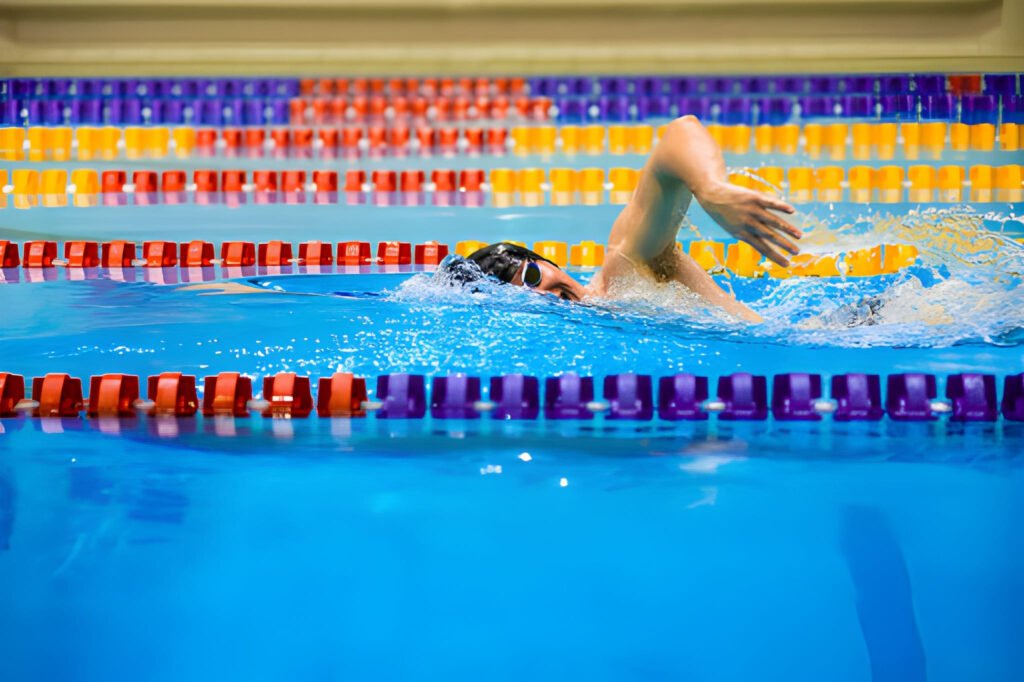
Swimmer training in a pool next to colorful lane dividers.

The Ultimate Swimming Workout Plan for Faster, Stronger Laps

I still remember coaching Alex, a quiet 17-year-old who used to swim like he was fighting the water instead of gliding through it. Every lap left him out of breath, frustrated, and convinced something was “wrong” with his body. But the truth was simple: he didn’t need more strength — he needed structure. Most swimmers don’t fail because they’re weak. They struggle because they just “get in and swim” without any plan, progression, or technique focus. And that’s exactly why I created this Ultimate Swimming Workout Plan — a practical, step-by-step routine to help swimmers at any level build speed, strength, and clean technique without burning out. Let’s dive in. Why a Structured Swim Workout Matters What Most Swimmers Get Wrong The biggest mistake swimmers make is treating every pool session like a cardio burst — swim fast, get tired, go home. There’s no warm-up. No skill focus. No progression. And without structure, speed becomes almost impossible because the body never adapts correctly. How a Plan Builds Speed + Strength A proper swimming workout: activates the right muscles teaches your body efficient rhythm develops controlled breathing builds endurance without exhaustion improves stroke mechanics Speed is not about thrashing harder — it’s about moving smarter. How Swimming Builds Strength & Speed Muscles Used in Each Stroke Swimming is one of the rare workouts that engages almost all major muscle groups simultaneously: Back & lats for pulling power Shoulders & arms for propulsion Core for stability Legs & glutes for strong kicks This full-body activation is why swimmers develop lean strength and explosive power without heavy weights. The Role of Breathing & Body Position Your breathing determines your speed. Your body position determines your drag. A simple two-beat kick perfectly timed with rotation can shave seconds off each lap. The Ultimate Swimming Workout Plan (3 Levels) Each level includes technique work, strength-building sets, and controlled intervals. Follow the level that matches your current ability. Level 1: Beginner Workout Plan (Building Control + Endurance) Warm-Up (200m) 100m easy freestyle 50m backstroke 50m kick with board Main Set (400m) 4×50m freestyle focusing on long strokes 4×50m kick (moderate pace) Rest 20 seconds between each Drills (200m) 4×25m catch-up drill 4×25m side-kick drill for balance Cool-Down (100m) Easy breaststroke or backstroke Goal: Master breathing rhythm + improve water comfort. Level 2: Intermediate Plan (Developing Speed + Strength) Warm-Up (300m) 100m freestyle 100m pull buoy 100m kicking Main Set (600m) 6×50m freestyle at 70–80% effort 4×50m pull with focus on high elbows 2×50m sprint (fast but controlled) Drills (200m) 4×25m fingertip drag (improves high elbow recovery) 4×25m sculling drill Cool-Down (100m) Easy choice Goal: Increase lap pace while keeping technique clean. Level 3: Advanced Interval Training (Maximum Speed + Power) Warm-Up (400m) 200m freestyle 100m IM (easy) 100m kick Main Set (800m) 8×50m freestyle at race pace (15–20 sec rest) 4×25m all-out sprints 4×50m pull with paddles 2×100m negative split (2nd half faster than 1st) Drills (200m) 4×25m high-speed turnover 4×25m streamline kick underwater (if safe) Cool-Down (200m) 100m easy free 100m backstroke Goal: Explosive speed + interval endurance. Strength-Building Swimming Drills Kickboard Power Drills Kickboard sets strengthen your core and legs, helping you stay aligned and reduce drag. Pull Buoy Arm Strength Sets Pull sets isolate upper-body power and help swimmers learn how to “hold the water” instead of slipping through it. Sprint Intervals Short bursts teach your body to recruit fast-twitch muscle fibers — essential for faster lap times. Technique Tips for Faster Laps Perfecting Your Freestyle Stroke Keep your fingertips just below the surface Pull backward, not downward Maintain relaxed, high elbows A clean catch creates far more speed than raw strength. Reducing Drag Your hips should stay at the surface. Imagine a string pulling your head forward — this keeps your body aligned and reduces resistance dramatically. Breath Timing Exhale underwater. Turn your head with your body, not separately. Breathing should never disrupt your rhythm. Weekly Schedule (Sample Routine) 3-Day Beginner Schedule Day 1: Technique + endurance Day 2: Kick + breathing control Day 3: Mixed stroke + easy sprints 5-Day Intermediate Schedule Day 1: Interval training Day 2: Technique day Day 3: Endurance day Day 4: Power sprints Day 5: Mixed IM day Consistency beats intensity every time. Common Mistakes to Avoid Overtraining Swimming hard every day does NOT make you faster — improving technique does. Poor Breathing Technique Gasping for air ruins your rhythm and tanks your stamina. Skipping Warm-Up or Cool-Down Warm-ups prepare your muscles for clean movement. Cool-downs flush out fatigue and reduce injury risk. Final Tips from Mindy I tell all my swimmers — from kids to triathletes — the same thing: “Speed comes from consistency, not talent.” Keep your sessions structured. Track your lap times. Focus on one technique improvement each week. Growth follows naturally. Whether you’re a nervous beginner or a swimmer chasing faster splits, this plan will give you the structure and confidence to move with power and purpose in the water — just like Alex did.  

The Ultimate Swimming Workout Plan for Faster, Stronger Laps Read More »

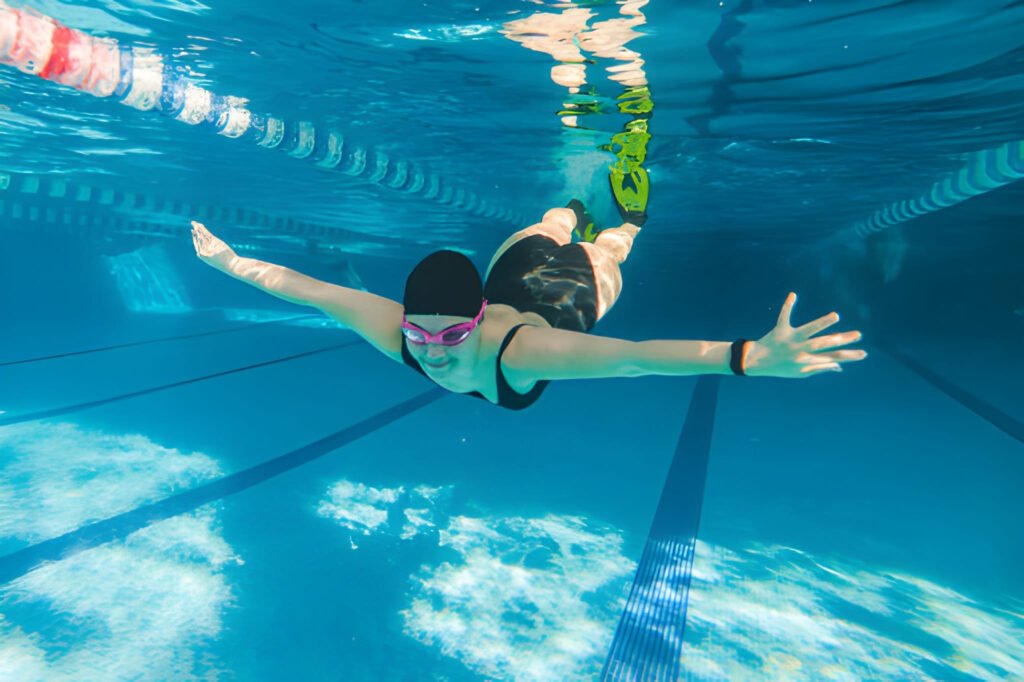
Young swimmer practicing butterfly stroke underwater

The Fear of Deep Water: How Beginners Can Overcome It in Weeks, Not Months

The Fear of Deep Water: How Beginners Can Overcome It in Weeks, Not Months If you’ve ever stood at the edge of a deep pool and felt your chest tighten, your heartbeat race, or your legs freeze, you are not alone. Many people experience the same tension when facing deep water for the first time. As a swimming instructor, I’ve guided first-time adults, nervous teens, and even experienced swimmers who panic in deep water. The truth is simple: fear of deep water isn’t about lacking skill — it’s about lacking confidence. Most people don’t struggle because they can’t swim. Instead, their mind doesn’t trust the water. Fortunately, this fear can be overcome — not in months, but in just a few weeks — using proven psychological and physical techniques. Why Deep Water Feels Scary (Even If You Can Swim in Shallow Water) Deep water triggers a unique kind of fear — the “what if something happens?” fear. Even confident swimmers often think: “What if I get tired?” “What if I sink?” “What if there’s nothing under me?” “What if I lose control?” This fear is neither childish nor irrational. It’s your brain’s survival system trying to protect you. The good news is that the water doesn’t change — only your perception does. Once your mind learns that the water supports you just the same as shallow areas, the fear starts to fade surprisingly quickly. The Technique That Works Faster Than Anything Else: Gradual Exposure with Safety Cues The biggest mistake beginners make is jumping straight from shallow to deep water. This approach shocks the brain and often increases panic. Instead, gradual exposure works best: Start in shallow water. Build comfort with floating. Practice balance and breathing. Move slowly toward deeper areas, step by step. Only enter deep water once you trust your body. When comfort increases gradually, the brain stops sending panic signals. In just a few weeks, students often report dramatic improvements. Why Floating Is the Real Secret to Confidence Many beginners assume mastering freestyle will eliminate deep water fear. In reality, floating is far more important. Learning how your body naturally stays afloat, especially on your back, builds immediate confidence. During lessons, I often start with: Back float with support Relaxation breathing Gentle face dips Glide practice Slow balance drills Once your body understands buoyancy, deep water becomes just another part of the pool. A Human Story: How One Student Beat Deep Water Fear in 19 Days A 29-year-old student came to me with severe anxiety. He wouldn’t go beyond three feet. On day one, he said: “I’m only afraid of two things — having nothing below me and losing control.” For the first week, we didn’t touch deep water. Instead, we focused on: Slow breathing Back floating support Confidence checkpoints Standing-to-floating transitions By day 10, he reached the middle of the pool without panic. On day 19, he swam his first deep-water lap with calm breathing and perfect balance. Nothing magical — just the right steps, patience, and consistent practice. The Psychological Trick: Replacing Fear Signals with Safety Signals Fear isn’t erased — it’s replaced. When beginners panic, the body sends signals: Heart racing Tight breath Stiff muscles During proper training, we teach the opposite signals: Slow breathing = “You’re safe.” Relaxed shoulders = “Water is supporting you.” Smooth kicks = “You’re in control.” When the mind repeatedly receives safety cues, deep water becomes normal — not scary. Why Most People Overcome This Fear in Weeks Deep water anxiety doesn’t require years of training. All it needs are: The correct method The right mindset A calm instructor or structured plan Gradual exposure Progress usually follows this pattern: Week 1: Fear decreases Week 2: Confidence builds Week 3–4: Deep water becomes comfortable Slow progress, consistent confidence, and proper guidance lead to fast results. The Most Underrated Skill: Breath Control Breath control separates panic from peace. When you control your breathing: Your mind stops imagining danger Muscles stop tightening Floating becomes stable Thinking stays clear even in deep water Simple drill: Inhale 4 seconds → Hold 2 seconds → Exhale 6 secondsPractice in shallow water daily for instant confidence improvement. How to Make Deep Water Feel Safe Every Time Follow this exact beginner-friendly routine: Master shallow-water comfort. Take your time. Learn back float properly. This is your emergency safety skill. Practice breathing drills. Fear drops significantly just from breath control. Increase depth gradually — one step at a time. Never fight the water. Relaxation equals buoyancy and safety. Go with a coach or calm partner. Support reduces panic more than any skill. This routine consistently transforms nervous beginners into calm, confident swimmers within weeks. Final Thoughts: Deep Water Fear Isn’t Permanent — It’s Trainable Fear is a natural response, not a weakness. Once your brain experiences safety in water, the fear melts away. You don’t need months of training, extraordinary strength, or natural talent — just the right steps, patience, and consistent practice. With this approach, deep water becomes a place you respect, not fear.

The Fear of Deep Water: How Beginners Can Overcome It in Weeks, Not Months Read More »

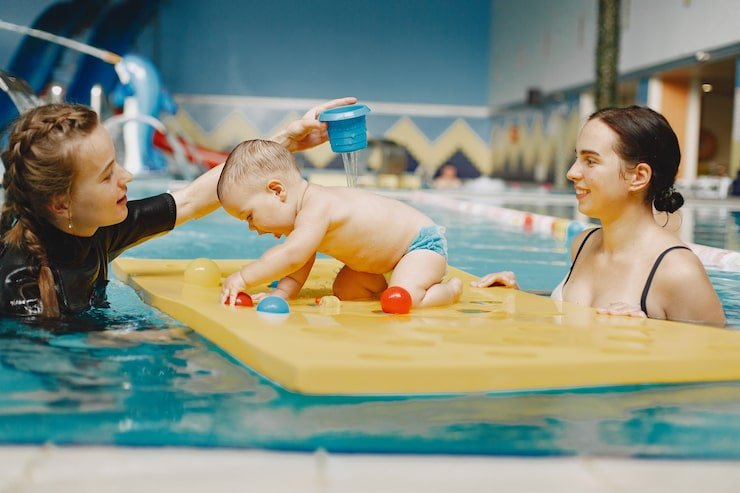
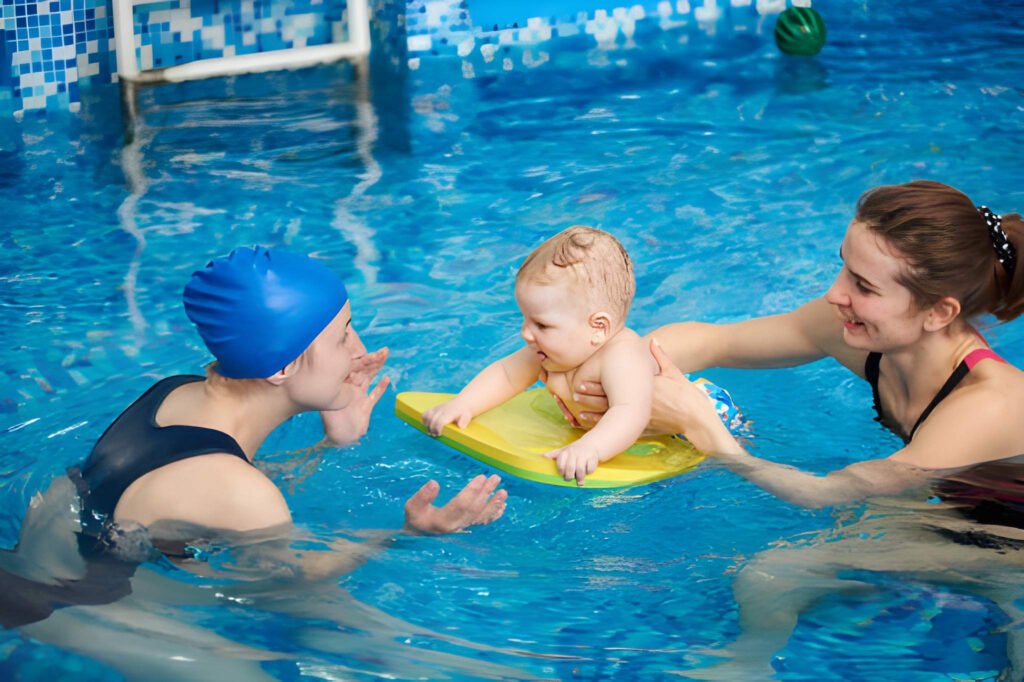
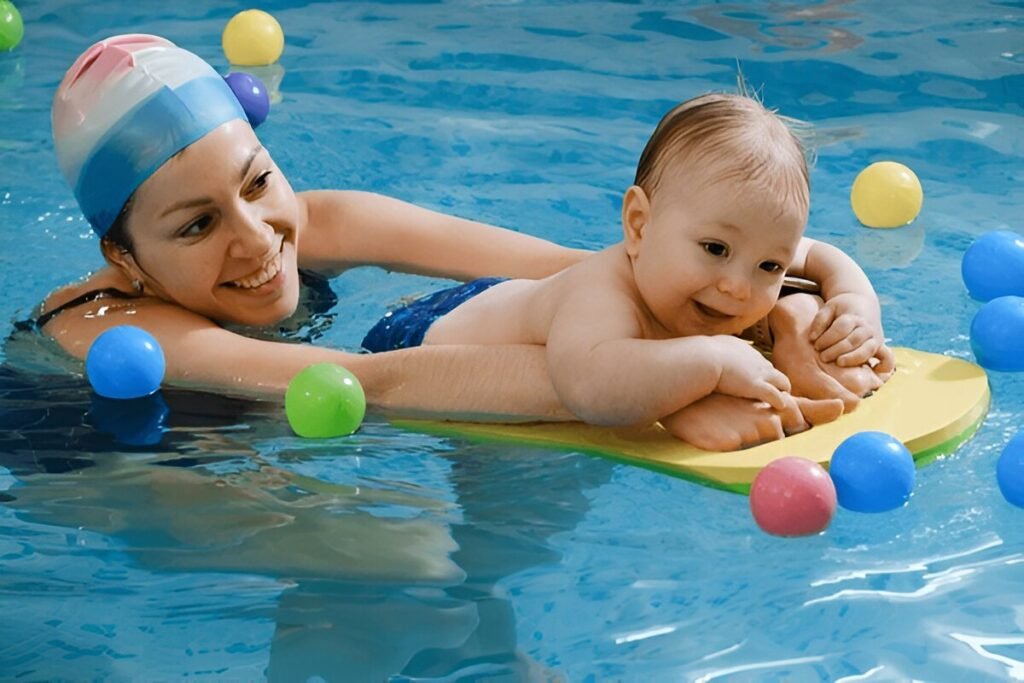
Swimming instructor guiding a baby during a pool session

Parent’s Guide: Preparing Your Child for Their First Swimming Lesson

If you’re reading this, chances are your child has their very first swimming lesson coming up — and you’re excited, nervous, or maybe a mix of both. Every parent feels this way before their child steps into a pool for the first time. At Mindy Swimming, we meet hundreds of families every year, and the worries are almost always the same: “Will my child be scared?” “Will they listen?” “What if they cry?” Let me tell you something comforting right from the start: these feelings are completely normal, and your child can do far better than you expect with just a little preparation at home. Preparing them mentally and emotionally can make the first lesson smoother, more fun, and more successful. In this guide, you’ll learn exactly what you can do before the first class, what to expect when you arrive, and how our safety-first approach builds water confidence from day one. Why Preparation Matters Before the First Lesson For a lot of kids, the pool is an unfamiliar place — a big blue space, echoing sounds, cool water, and a new adult guiding them. When a child feels prepared, their brain recognizes the experience as safe, not scary. Building Confidence Before Entering the Water Kids mirror parent energy. If you speak about swimming with excitement instead of pressure, your child feels more ready. A simple sentence like, “You’re going to have fun splashing and learning today,” goes a long way. Reducing Fear and Anxiety Fear almost always comes from the unknown. When children know what will happen — dipping toes, blowing bubbles, floating with support — the anxiety fades. What to Expect During the First Swim Lesson If this is your first time at Mindy Swimming, let’s walk you through what a typical first lesson looks like. How Instructors Introduce Water We never rush a child. The first few minutes are all about connection: The instructor kneels, makes eye contact, smiles, and speaks gently. This small moment helps children trust the person guiding them. Next comes introduction to water: touching water with their hands, gently kicking, and splashing. The goal? To make water feel like a friend, not something to avoid. Safety Protocols at Mindy Swimming Every teacher at our school is CPR-certified and trained in emergency response. Safety isn’t a chapter in our system — it’s the foundation. From how we hold children, to how we teach breath control, to how we move around the pool — everything follows a strict protocol designed to protect your child. Why We Don’t Use Goggles on Day One Parents often ask, “Why no goggles?” Because children must first learn true water comfort, including getting their face wet without relying on gear. Goggles come later, once they understand the feel of water on their face and can blink underwater confidently. How Parents Can Prepare Their Child at Home A little home practice creates a big difference on lesson day. Practice Face-in-Water Comfort During bath time, ask your child to splash water on their cheeks, gently pour water down their back, or blow bubbles through their mouth. No force — just playful interaction. Teach Basic Breath Control Hold your hand a few inches from your child’s face and say “Ready… blow!” Let them blow out air like candles. This is the same motion used to blow bubbles in the pool. Fun Water Play to Build Confidence Turn preparation into a game: Who can splash higher? Who can blow bubbles the longest? Can you wash your face with 3 scoops of water? Games remove pressure and build natural comfort. What to Pack for the First Swim Class (Checklist) Here’s a simple parent-tested checklist: Comfortable swimsuit Towel (a soft one helps during transitions) Extra pair of clothes Hair ties or swimming cap for long hair Sandals or pool shoes A positive attitude (kids feel this instantly) Why Simple Gear Helps Learning Children learn best when they’re not overwhelmed by equipment. A basic swimsuit, towel, and warm encouragement are more than enough. Common Mistakes Parents Should Avoid Even the most well-intentioned parents do a few things that backfire during the first lesson. Over-Coaching During the Class Shouting instructions like “Kick! Kick more!” or “Don’t be scared!” can actually increase anxiety. Let the instructor lead — your child needs one voice at a time. Setting Unrealistic Expectations Children progress differently. Some dip their face on day one; others take a few lessons. Both are okay. Progress is progress. How Mindy Swimming Ensures Safe, Confident Learning When we say we teach with safety and confidence in mind, here’s what that actually means: CPR-Certified, Trained Instructors Every instructor follows a standardized method developed through years of hands-on teaching and professional training. We don’t guess — we follow a structured system. 25-Minute Lesson + 5-Minute Free Time Our lessons follow a 25-minute focused instruction block and a 5-minute fun time at the end. This helps children associate swimming with joy, not pressure. It also gives them something to look forward to at the end of each class. Final Parent Tips for a Smooth First Swim Lesson Before the lesson, remind your child: “You’re safe.” “Your teacher will help you.” “You’re going to have fun.” After the lesson, praise the effort, not the skill. Say, “I’m proud of how brave you were,” instead of “You should have floated longer.” Kids grow faster when they feel proud of themselves. Closing Thoughts Your child’s first swimming lesson is more than a class — it’s the beginning of a lifelong skill that keeps them safe, confident, and active. With a little preparation and a calm, positive mindset, you’ll set your child up for success before they even touch the water. And remember: Every child starts small, but every child grows. The goal of day one isn’t perfection — it’s comfort, trust, and a tiny spark of confidence. Once that spark appears, everything else becomes easy.

Parent’s Guide: Preparing Your Child for Their First Swimming Lesson Read More »

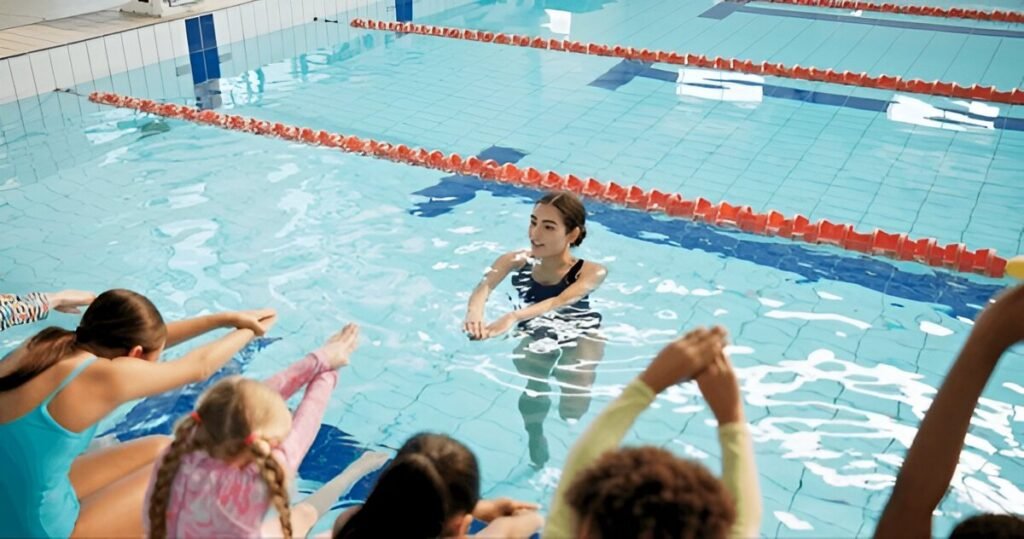
Swimming coach teaching a group of kids in a training pool

Swimming Lessons for Toddlers: What Age Is Best to Start?

Hey there, parents. Let’s be real. That question—”When should I start my kid with swimming?”—it nags at you, doesn’t it? You see those videos of tiny toddlers gliding through the water, and you wonder, “Is my little one ready?” You want them to be safe, to be confident, but you also don’t want to push them too soon. The answer isn’t a single number that works for every child. It’s a sweet spot where your toddler’s development, curiosity, and the right kind of instruction all come together. The Goldilocks Window: Finding the “Just Right” Age While parent-and-baby sessions can start from infancy, the period between 1 and 3 years old is where the real magic happens for setting the foundation. At Mindy Swimming, our formal lessons start at age 3—not any earlier. This ensures that children have the developmental readiness to truly benefit from 1:1 instruction. Ages 1-2: The “Water is Fun” Foundation: At this stage, it’s all about water acclimation. Through songs and play, they learn that the water is a place for joy. Ages 2-3: The “I Can Do It!” Phase: This is the perfect storm of readiness. Toddlers start to find their confidence and learn to trust the water under expert supervision. The focus here is purely on safety and independence; we do not let them do the “doggy paddle” as we focus on proper safety fundamentals instead. A Peek Inside Mindy’s Toddler Swim Lessons Wondering what you’re signing up for? At Mindy’s, we don’t teach “classes”; we provide individual 1:1 lessons tailored specifically to your child. This 5-day-a-week format ensures rapid but solid progress. Safety is our non-negotiable foundation. While our instructors focus on the water skills, Mindy herself is fully certified in pediatric first-aid to ensure a secure and professional environment for every student. Social and Emotional Gains In their lessons, toddlers learn to listen to their teachers and master new skills. Mastering a new skill—like floating alone for the first time—builds a core self-esteem and resilience that they carry everywhere. This focused environment helps them develop discipline and confidence that extends far beyond the pool. From Safety to Skill: The Progression Once a child feels comfortable in the water and has learned the basics of safety, we focus on the skills they will use as they grow into advanced swimmers. We don’t believe in “7-day challenges”—it takes time and patience to get these skills down properly. Here is what we teach all kids once they are ready: Breath Control: Learning to blow bubbles and submerge comfortably. Independent Floating: Mastering the art of floating alone to build core confidence. Kicking & Gliding: Developing the muscle memory needed for independent movement. Spatial Awareness: Knowing where the wall is and how to reach it for a safe exit. Your Prep-School Checklist: Talk It Up: Get them excited! “We’re going to swim lessons to play in the water!” Bath-Time Practice: Use bath time to practice gently pouring water over their head. The Go-Bag: Swim diaper, towel, and a post-lesson snack are essentials. The Final Word: Trust Your Gut When choosing the right time for Mindy’s Swim Lessons, remember that we focus on children aged 3 and up. We do not start lessons for children younger than 3 years old to ensure they have the physical and cognitive readiness to excel. The single most important factor isn’t the exact month you start; it’s the program you choose. We focus on building confident, safe, and happy kids through personalized 1:1 attention.

Swimming Lessons for Toddlers: What Age Is Best to Start? Read More »

Instructor helping a swimmer with floating and kicking techniques in the pool

7 Day Swimming Challenge: Transform from Beginner to Confident Swimmer

Introduction Are you among the 64% of adults who feel nervous around deep water? That anxiety ends here. I’ve trained over 200 beginners through this exact 7-day swimming challenge, watching office workers, college students, and even parents in their 50s transform from water-shy individuals into confident swimmers. This isn’t just another “learn to swim” article – this is a battle-tested program that works because it addresses the real reasons people struggle: fear, improper breathing, and lack of structure. By this time next week, you’ll not only understand swimming fundamentals but will have actually swam multiple laps with confidence. Why This Program Works Where Others Fail Most swimming programs overwhelm beginners with technical details from day one. Having taught swimming for eight years at the Mumbai Aquatic Center, I’ve learned that success comes from mastering comfort before technique. This program prioritizes psychological comfort alongside physical skills – a approach validated by the International Swimming Hall of Fame’s beginner guidelines. The progressive structure ensures you build confidence as steadily as you build skills. Day 1: Water Comfort & Breathing Basics (The Foundation) I always tell my students: “The water wants to support you – you just need to learn how to let it.” Start in chest-deep water where you can easily stand. Hold the pool edge and practice exhaling slowly through your nose underwater – creating a steady stream of bubbles. Then, try floating on your back while keeping your ears submerged. Most beginners make the mistake of lifting their head – instead, focus on keeping your belly button toward the sky. Spend 20-30 minutes on these fundamental drills until the water feels less like an adversary and more like a supportive environment. Day 2: Kicking Techniques (Finding Your Propulsion) The flutter kick originates from your hips, not your knees – this is the most common correction I make on day two. Using a kickboard, practice moving across the pool while focusing on creating small, rapid kicks with nearly straight legs. For those without kickboards, hold the pool wall and practice the same motion. You’ll know you’re doing it correctly when you feel the forward momentum. Many students report sore ankles initially – this is normal and indicates you’re using new muscles. Day 3: Arm Movements & Coordination (Connecting Upper Body) Stand in chest-deep water and practice the “windmill” motion of freestyle arms. The key is entering your thumb-first with a slightly bent elbow, pulling water toward your feet, and exiting with your thumb brushing your thigh. I’ve found that visualizing “scooping ice cream” during the pull phase helps beginners understand the motion better. Practice this slowly for 15 minutes before adding any kicking. Day 4: Body Position & Balance (The Streamline Secret) Competitive swimmers call this the “superman position” – arms extended above your head, face in the water, body stretched long. Push off from the pool wall in this position and glide as far as possible. This teaches your body the most efficient swimming position. Most beginners discover they can glide much farther than expected – sometimes the entire width of the pool! This breakthrough moment often provides the confidence boost needed for the coming days. Day 5: Putting Strokes Together (The Big Leap) Today, you’ll swim your first full strokes. Take a deep breath, face in the water, and combine everything: arms, legs, and breathing. The trick is to start with just 2-3 strokes before standing up to breathe. Don’t worry about beauty or speed – focus solely on coordination. Many students experience the “eureka moment” on this day, when suddenly the separate elements click together into actual swimming. Day 6: Endurance Building (Increasing Capacity) Now that you can swim a few strokes, we’ll build stamina. Swim 2-3 laps with 30-second breaks between each. Concentrate on maintaining good form even as you tire. I remind my students: “Fatigue makes cowards of us all – but today we fight back by building your swimming endurance systematically.” Day 7: Full Beginner Swim Test (Proving Your Progress) Your final challenge: swim 10-15 meters continuously. This isn’t about perfection – it’s about demonstrating the confidence and skills you’ve developed. Most participants not only complete this distance but often exceed it, swimming 20-25 meters with the momentum they’ve built. Take a moment to acknowledge how far you’ve come in just seven days. Essential Safety Guidelines (Non-Negotiable) Never practice alone – always ensure lifeguard or companion supervision. Avoid crowded lanes where you might get bumped. If you feel panic setting in, simply roll onto your back and float – this emergency technique has prevented countless stressful situations for my students. FAQs From Real Beginners “What if I don’t complete everything in 7 days?” – Many don’t, and that’s perfectly fine. This program provides a structure – adapt the timeline to your comfort level. “How deep should the water be?” – Chest-deep is ideal for beginners – deep enough to swim but shallow enough to stand when needed. “I wear glasses – can I still learn?” – Prescription goggles are an excellent investment that have helped many vision-impaired students learn successfully. Your Journey Continues Completing this 7-day challenge isn’t the end – it’s the beginning of your swimming journey. Consider joining a beginner’s swimming group or taking a few professional lessons to refine your technique. The water that once intimidated you is now your playground – dive in with confidence and enjoy this skill that will benefit your health and safety for life.

7 Day Swimming Challenge: Transform from Beginner to Confident Swimmer Read More »

Mother helping a baby float on a pool mat during a swimming lesson

5 Essential First Swim Lesson Tips for Kids & Adults

Introduction: Beyond the First Splash As a coach with over 30 years of experience, I’ve seen every possible reaction to the water. I’ve seen the child who jumps in before I’ve even said hello, and I’ve seen the one who clings to their parent’s leg like their life depends on it. Preparing a child for their first 1:1 private lesson is a delicate balance of encouragement, consistency, and professional boundaries. At Mindy Swimming, we don’t just teach strokes; we build a foundation of safety and independence that stays with your child for life. Many parents ask me how they can make that first transition easier. The truth is, the preparation starts at home, long before you ever reach the pool’s edge. Here is my expert guide on how to set your child up for success in our private sessions. Tip 1: Focus on Learning to Have Fun in the Water (Not a “Pool Party”) One of the biggest mistakes parents make is calling a lesson a “pool party.” Please, do not call it a pool party. A party implies a lack of structure and complete freedom. A lesson, however, is a professional environment where we focus on learning to have fun in the water through skill-building and trust. In my private lessons, we don’t waste time on group games or distraction-based play that you might see in a large class setting. Our focus is the Teacher-Child Connection. We introduce the child to the water with a gentle but firm confidence. I personally take them by the hand or pick them up to enter the water so they can immediately feel its resistance and depth in a safe, controlled way. By setting the right expectation at home—that they are going to learn a vital new skill with a teacher—you help them arrive with a focused and ready mindset. Tip 2: The Strict “No Floaties” and “No Goggles” Policy I cannot emphasize this enough: No floaties or water wings are allowed at any time during our swim lessons. While these devices are popular for casual pool days, they are the single biggest obstacle to true water safety and proper development. Floaties create a “vertical” muscle memory. They teach a child that they will always stay upright and bob to the surface without effort. In a real-world emergency, those devices won’t be there. At Mindy Swimming, we teach children to rely on their own bodies. We want them to understand buoyancy and how to find the “surface” independently. Similarly, we do not use goggles for beginners. Water safety is about being prepared for the unexpected. If a child falls into a pool accidentally, they won’t have goggles on. If they haven’t learned to open their eyes and stay calm in the water, panic sets in immediately. We train our students to be comfortable and capable with the elements exactly as they are. Tip 3: Practice “Bath Time Homework” (The Parent’s Classroom) The most successful students are the ones whose parents take the lead at home. You are your child’s first teacher, and the bathtub is your first classroom. At Mindy Swimming, we call this the “bridge” to the pool. Water Over the Head: During bath time, use a cup to gently pour water over your child’s head. Don’t shield their eyes; they need to learn that water in the face is a normal sensation. Ear Immersion: Have them lay back in the tub and put their ears in the water. This sensation of “muffled sound” is often the scariest part for beginners. If they master this with you in the safety of your home, they will be weeks ahead of the curve when they get to me. No Force, Just Consistency: We don’t believe in forcing, but we do believe in making water exposure a non-negotiable part of the daily routine. Tip 4: Trust the Teacher-Child Connection In a 1:1 private lesson, the magic happens through the bond between the instructor and the student. Unlike group lessons where a teacher’s attention is split between five or six kids, my focus is entirely on your child’s unique needs and fears. I’ve had students like “Lily,” who was terrified after a bad experience elsewhere. We didn’t even enter the pool for the first ten minutes. Instead, we sat on the steps and I focused entirely on connecting with her. I don’t use ” Simon Says” or group commands; I use direct communication and empathy. As a parent, the best thing you can do is step back and let that connection form. Your child needs to know that the teacher is the authority in the water, and once they feel that security, their progress will skyrocket. Tip 5: Celebrate Every Tiny Win (Individual Progress) In a group lesson, teachers often celebrate “who can blow the most bubbles” or “who can kick the fastest.” In my lessons, the only person your child is competing with is their past self. I need parents to celebrate every little thing their child does differently each day. * Did they let the teacher take their hand without crying? That’s a win. Did they put their chin in the water for one second longer than yesterday? That’s a win. Did they successfully complete a “Safety Jump” to the teacher? That’s a huge win. Private instruction is about the individual journey. By acknowledging these micro-improvements, you build the child’s confidence. When they feel you are proud of their specific progress—not compared to anyone else—they become more willing to take the next big step, like their first unassisted back-float. Conclusion: A Partnership for Safety Success in the pool isn’t just about what happens during our 30 or 60 minutes together. It’s a partnership between the teacher, the child, and the parent. At Mindy Swimming, our 30 years of expertise ensures that your child is getting the most direct, professional path to water independence. When you follow these tips—setting the right expectations, ditching the floaties, and practicing “ear immersion” at home—you aren’t just preparing

5 Essential First Swim Lesson Tips for Kids & Adults Read More »

Kids swimming with colorful goggles and floaties in a pool

How Swim Lessons Build Confidence and Safetyfor Kids at Mindy Swimming

I’ll never forget watching little Maya during her first lesson with us. She stood poolside, tiny hands shaking, tears mixing with the chlorine-scented air. “I can’t do it,” she whispered, clinging to her mother’s leg. Fast forward two months, and that same girl practically bounced into class, beelining for the steps where she proudly demonstrated her new back-float. Her mom later told me, “It’s like watching a different child – she carries herself differently everywhere now, not just in the pool.” Here at Mindy Swimming, we’ve seen this transformation happen countless times over our thirty years teaching kids here in Des Moines. As parents ourselves, we get it – that mix of excitement and nerves when your child approaches water. You want them to love swimming, but more importantly, you need them to be safe. That’s why we’ve built our program around what really matters: helping kids feel capable and secure in the water. Why Water Confidence Matters Beyond the Pool Let’s be real – most kids are naturally drawn to water, but many feel that initial fear too. And honestly? That healthy respect for water is a good thing! The challenge is helping them move from fear to confidence in a way that sticks. Take seven-year-old Liam, who started with us last spring. For the first few weeks, he wouldn’t go beyond the pool steps. Our instructors never pushed – instead, we focused on building a direct Teacher-Child connection. The day Liam finally let go of the wall to perform his first safety jump, his face lit up with this incredible “I did it!” expression. That moment wasn’t just about swimming – it was about him learning he could overcome something scary. What we’ve noticed is that this confidence doesn’t stay in the pool. Parents constantly tell us how their children become more willing to try new things at school, more resilient when facing challenges, even more outgoing with friends. Mastering physical skills like swimming significantly boosts children’s overall self-esteem. Safety Skills That Become Second Nature While confidence grows, safety remains our non-negotiable foundation. Having taught thousands of children over the last three decades, we’ve seen how proper training makes all the difference in emergency situations. Our approach starts with the basics many parents might not think about—like the “No Goggles” policy. We teach kids to be comfortable with water in their eyes because, in a real-life emergency, they won’t be wearing gear. We also practice “The Safety Jump” and back-floating until they become automatic responses. I’m thinking of the Johnson family, whose three kids have all come through our program. Last summer, their youngest, Chloe, slipped into a pool during a family barbecue. Without thinking, she rolled onto her back and floated while calling clearly for help. Her dad told us later, “Those repetitive safety drills you do? They saved us from what could have been a tragedy.” What Makes Mindy Swimming Different So what sets our approach apart? It’s our experience and our one-on-one philosophy. Our instructors aren’t just strong swimmers; they’re educators who understand kids. We meet each child where they are emotionally. Some kids need gentle encouragement, while others respond to direct challenges. Because we focus on 1:1 private lessons and very small, supervised groups, each child gets the individual attention they need. We don’t pack the pool with large classes where kids get lost in the crowd. Real Stories From Our Swim Family The best part of our job is watching these transformations unfold. There’s Noah, who started with us at six while struggling with anxiety. His school teacher recently mentioned he’s now raising his hand in class and even joined the soccer team. His mom thinks swimming was the turning point: “Learning he could conquer his fear of water gave him confidence everywhere else.” Then there’s the Williams family, who make the trip specifically for our specialized coaching. When I asked why they choose us, Mrs. Williams said, “It’s not just about swimming. My kids are learning perseverance and what it feels like to master something difficult without relying on floaties or goggles. That’s worth everything.” Why Local Families Keep Choosing Us After 30 years in business in Des Moines, we’ve learned that trust isn’t built through marketing – it’s built through consistency and genuine care. Parents see how we handle fears with patience and celebrate every small victory. We celebrate every tiny win, from a child letting go of the steps to mastering a life-saving float. We’re proud of our perfect safety record and our long-standing commitment to the community. But what really matters to us are the relationships we’ve built – the former students who now bring their own children to us to learn the same life-saving skills. Ready to Start Your Child’s Swimming Journey? Every child who walks through our doors brings their own unique personality, fears, and potential. Our promise is to honor that individuality while providing the essential skills every child needs around water. The benefits of swimming extend far beyond summer fun – it’s a lifelong skill that builds character, promotes health, and could one day save a life. Because every child deserves to feel both safe and confident in the water – and we’d be honored to help your child get there.

How Swim Lessons Build Confidence and Safetyfor Kids at Mindy Swimming Read More »

Scroll to Top